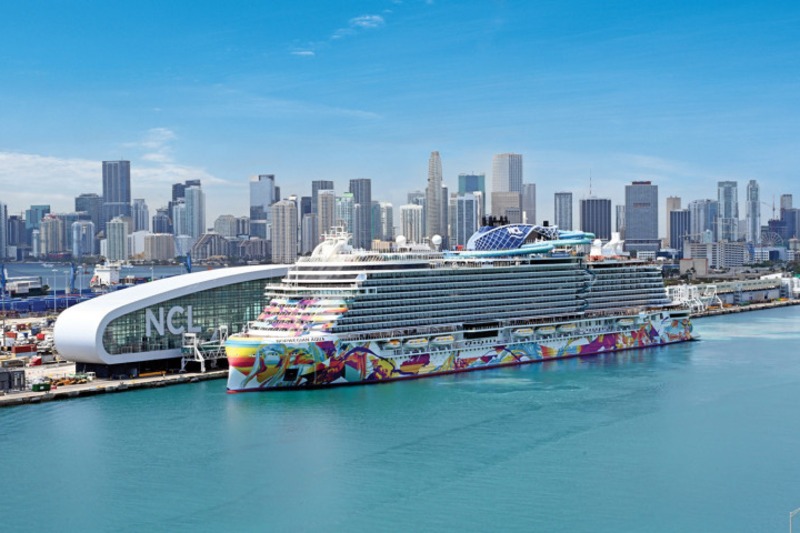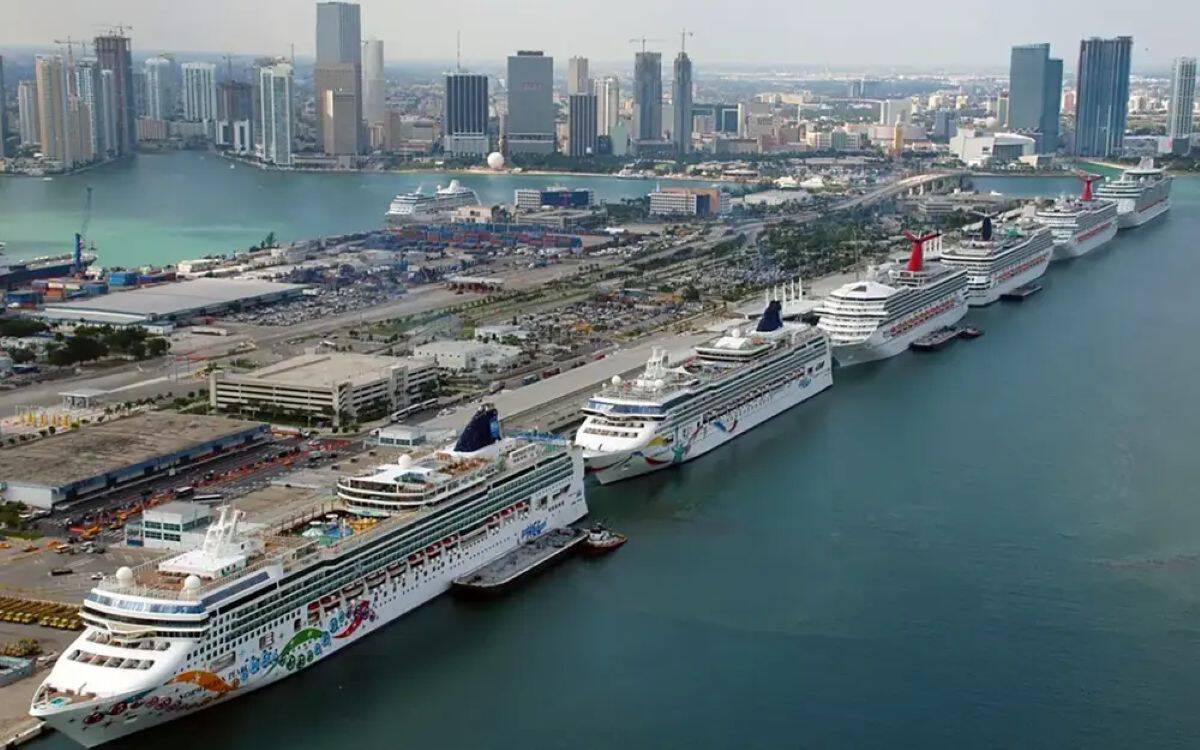
The US cruise travel 2027 forecast points to another landmark year for ocean holidays, with 22.4 million Americans expected to take cruises. AAA projects a 3.6% increase from 2026 and a 57% rise compared with 2019. The Caribbean will retain its overwhelming appeal, accounting for an estimated 71% of American cruise passengers’ destination choices. Meanwhile, Florida’s Miami, Port Canaveral and Fort Lauderdale will remain central to the country’s cruise departure network. Alaska and the Mediterranean offer alternatives for travellers seeking different landscapes and experiences. The outlook also highlights changing holiday habits, including shorter itineraries and growing demand for convenient, experience-led breaks.
Record Cruise Demand Signals Another Industry Milestone
American demand for ocean cruising is expected to reach a fifth consecutive annual record in 2027. The latest forecast from AAA puts the projected passenger total at 22.4 million, reinforcing cruising’s recovery and subsequent expansion beyond pre-pandemic levels.
Advertisement
Advertisement
The comparison with 2019 is particularly striking. Approximately 14.2 million Americans took ocean cruises that year, against the 22.4 million now projected for 2027. That represents an increase of 8.2 million passengers, or roughly 57.7% when calculated from the rounded figures. AAA describes the overall increase as 57%.
The growth trajectory has remained positive since cruise demand surpassed pre-pandemic levels in 2023. AAA’s October 2025 forecast projected 21.7 million American cruise passengers for 2026. Its latest outlook raises the projected 2027 total further, although forecasts remain subject to changing economic and travel conditions.
Advertisement
Advertisement
The forecast was prepared by AAA in cooperation with Tourism Economics. Its methodology considers scheduled cruise itineraries, economic projections and wider travel-sector trends. Crucially, the passenger estimate covers US residents taking ocean cruises from domestic and international ports. It does not represent the number of visitors entering the United States or the number of passengers departing American ports alone.
For cruise operators, travel advisers, port authorities and destination managers, the outlook indicates continuing demand for ships, shore excursions, transport connections and pre-cruise accommodation. However, the forecast does not guarantee equal growth across every route or port. Businesses will need to consider itinerary preferences, seasonal capacity and local infrastructure when planning for the year ahead.
Advertisement
Advertisement
Caribbean Commands the Largest Share of Demand
The Caribbean remains the standout destination in AAA’s 2027 outlook, accounting for 71% of projected American cruise passengers’ destination choices. Alaska follows with 7%, while the Mediterranean accounts for 6%. Other global destinations collectively represent the remaining 16%.
These figures underline the region’s exceptional position in the American cruise market. Its appeal combines accessible departure ports, warm-weather holidays, island-hopping itineraries and a broad range of shipboard entertainment. For many travellers, the ability to visit several destinations without repeatedly changing hotels adds further convenience.
Advertisement
Advertisement
Cruise lines have also invested in private island experiences and larger vessels serving the region. AAA identifies ships carrying at least 4,500 passengers as part of this development. These vessels can offer extensive dining, entertainment and recreational facilities, turning the ship itself into a major component of the holiday.
Nevertheless, a private-island stop does not necessarily mean that passengers can explore every part of a destination independently. Access arrangements, excursion availability and the time permitted ashore depend on individual itineraries. Travellers should therefore examine the full port schedule rather than selecting a cruise solely by its headline destination.
The Caribbean’s 71% share also requires careful interpretation. It describes the destination distribution in AAA’s US passenger forecast, not the Caribbean’s share of all global cruise passengers. That distinction matters when comparing the outlook with international industry statistics.
How Cruise Destinations Compare in 2027
The forecast gives travellers a useful starting point for comparing established cruise regions. However, each destination offers a different balance of climate, scenery, travel duration and shore-based experiences.
Advertisement
Advertisement
| Cruise destination | Projected share of US passengers in 2027 | Main appeal | Planning consideration |
|---|---|---|---|
| Caribbean | 71% | Tropical beaches, island visits and large resort-style ships | Compare port calls, excursion costs and seasonal weather |
| Alaska | 7% | Glaciers, wildlife and dramatic coastal scenery | The operating season is shorter, and cabin availability can be limited |
| Mediterranean | 6% | Historic cities, cultural attractions and varied coastal destinations | Check port distances, sightseeing time and seasonal temperatures |
| Rest of the world | 16% | A broad mix of international routes and specialist itineraries | Compare flight connections, visa requirements and itinerary length |
For travellers prioritising a beach-focused break, the Caribbean offers the widest choice within this forecast. Alaska provides a markedly different experience, with nature and scenery taking precedence over tropical resort activities. Meanwhile, Mediterranean itineraries can combine several countries and historic cities within one holiday.
The 16% allocated to other destinations should not be overlooked. It indicates that American cruise demand extends beyond the three leading regions, although AAA’s headline figures do not break that combined category into individual destinations.
Florida Ports Anchor the Cruise Network
Florida is central to the forecast, with Miami, Port Canaveral and Fort Lauderdale identified as the three busiest cruise ports worldwide in AAA’s report. Their combined position reflects the strength of the state’s cruise infrastructure and its proximity to major Caribbean itineraries.
AAA’s forecast assigns Miami an 11.2% share of passenger embarkations and disembarkations, followed by Port Canaveral at 10.4% and Fort Lauderdale at 5.3%. Barcelona and Galveston complete the top five, with shares of 4.4% and 4.3%, respectively.
These percentages measure port activity within the forecast’s reported comparison. They should not be confused with each port’s share of all American cruise travellers, since AAA’s overall passenger estimate includes US residents sailing from international ports.
| Cruise port | Reported share | Location | Practical advantage |
|---|---|---|---|
| Miami | 11.2% | Miami, Florida | Access to South Florida and Caribbean itineraries |
| Port Canaveral | 10.4% | Near Orlando, Florida | Potential to combine a cruise with Orlando attractions |
| Fort Lauderdale | 5.3% | Fort Lauderdale, Florida | Access to South Florida accommodation and transport |
| Barcelona | 4.4% | Barcelona, Spain | Gateway to Mediterranean itineraries and city sightseeing |
| Galveston | 4.3% | Galveston, Texas | Departure option for travellers exploring the Texas Gulf Coast |
Recent port results provide additional context for Florida’s importance. PortMiami recorded 8,564,225 cruise passengers in fiscal year 2025, a 4.02% increase from 8,233,056 in the previous fiscal year. The figures demonstrate continued growth in passenger movements at the port.
Advertisement
Advertisement
Port Canaveral, meanwhile, reported more than 8.6 million revenue passenger movements in fiscal year 2025, representing a 13% increase over fiscal 2024. These are historical port figures, not projections for 2027. They nevertheless illustrate the scale of operations supporting the wider cruise market.
For travellers, choosing a departure port involves more than finding the lowest cruise fare. Airport transfers, hotel prices, parking, luggage arrangements and the timing of embarkation can materially affect the overall cost and convenience of a holiday.
Global Cruise Growth Offers Wider Context
American demand forms part of a much larger international industry. The Cruise Lines International Association (CLIA) reported 34.6 million global cruise passengers in 2024 and projected 37.7 million for 2025. Its May 2025 industry report also estimated more than US$168 billion in global economic impact and 1.6 million jobs supported by cruise tourism.
CLIA’s 2025 global market reporting subsequently put worldwide cruise passenger volume at approximately 37 million for that year. It identified the Caribbean as the leading global destination, attracting 44% of passengers, or more than 16 million guests. Europe, including the Mediterranean, ranked second among destination regions.
The figures should not be treated as a direct like-for-like comparison with AAA’s 2027 forecast. CLIA measures worldwide cruise activity, while AAA estimates ocean cruises taken by US residents. Different reporting periods and methodologies also affect comparisons.
| Indicator | Reported figure | What it tells readers |
|---|---|---|
| US cruise passengers, 2019 | 14.2 million | Pre-pandemic comparison point |
| US cruise passengers, 2027 forecast | 22.4 million | Expected American passenger volume |
| Forecast US growth, 2026–2027 | 3.6% | Projected year-on-year expansion |
| Global cruise passengers, 2024 | 34.6 million | Historical worldwide passenger volume |
| Global cruise passengers, 2025 | Approximately 37 million | Reported global industry scale |
| Caribbean share of global passengers, 2025 | 44% | The region’s worldwide destination position |
The comparison highlights the Caribbean’s influence at both regional and global levels. It also shows why port investment, destination management and passenger services matter beyond the United States. Cruise growth creates opportunities for local businesses, but destinations must also manage visitor flows, transport demand and pressure on popular sites.
Advertisement
Advertisement
Shorter Cruises Are Changing Holiday Choices
Cruise growth is not simply about passenger numbers. AAA’s forecast also identifies shorter itineraries as an important trend, particularly for travellers balancing holidays with work, education and family commitments. Seven-night cruises remain the most popular duration, yet shorter breaks are attracting a growing share of American passengers.
In 2025, 45% of US ocean-cruise passengers booked itineraries lasting six nights or fewer, compared with 39% in 2019. The six-percentage-point increase suggests that shorter cruises have become a more prominent option for travellers seeking time-efficient holidays.
For first-time passengers, a shorter itinerary can provide an introduction to cruising without requiring a full week away. It may also help families coordinate school holidays or enable travellers to combine a sailing with a longer land-based trip.
However, a shorter cruise is not automatically cheaper overall. Travellers should compare the full fare, transport to the departure port, hotel stays, onboard purchases and excursion costs. A lower headline price can become less attractive when additional expenses accumulate.
The wider appeal of cruising also appears connected to customer satisfaction. AAA reports that more than 90% of US cruise passengers rate their experience as good or very good, while 93% of travellers book again. These figures indicate strong repeat demand, although they should be understood as reported industry findings rather than a guarantee of individual satisfaction.
For travel advisers and cruise operators, these patterns reinforce the importance of matching itinerary length, ship facilities and shore experiences to the customer. A successful booking depends on more than the destination name or vessel size.
Advertisement
Advertisement
What Travellers Should Check Before Booking
With demand expected to rise again, early planning could help travellers secure suitable cabins and departure dates. AAA recommends booking early, particularly for Alaska, where the shorter sailing season can restrict available inventory. Travellers should also familiarise themselves with their cruise line’s app before departure.
One important precaution concerns flights. AAA advises passengers to arrive in the departure city the day before their cruise. This provides a buffer against flight delays and cancellations, reducing the risk of missing embarkation.
Travel insurance deserves similar attention. Policies differ in their coverage of missed departures, medical emergencies, cancellations and additional accommodation. Travellers should read exclusions carefully and confirm whether their policy covers the particular cruise and destination.
| Booking consideration | Recommended action | Why it matters |
|---|---|---|
| Cabin availability | Compare dates and cabin categories early | Popular sailings may have limited suitable options |
| Flights | Arrive at the port city a day before departure | Reduces exposure to same-day flight disruption |
| Total budget | Include gratuities, drinks, excursions and transfers | The advertised fare may not cover every holiday expense |
| Travel documents | Check passport validity, visas and entry requirements | Requirements vary by itinerary and nationality |
| Insurance | Review cancellation, medical and missed-departure cover | Protection depends on policy terms and exclusions |
| Shore excursions | Compare organised tours with independent options | Helps balance cost, convenience and time ashore |
| Port transfers | Confirm terminal location and transfer arrangements | Different terminals and transport options can affect journey times |
These checks are particularly important for international travellers departing from US ports. Visitors should confirm their US entry permissions, transit arrangements and any destination-specific requirements through the relevant official authorities. Requirements depend on nationality, itinerary and individual circumstances.
Caribbean Growth Brings New Opportunities
The projected expansion creates opportunities across the cruise supply chain. Port operators may benefit from passenger services, terminal activity and associated transport demand. Hotels, restaurants, tour operators and transfer providers can also attract spending from passengers arriving before departure or staying after disembarkation.
However, higher passenger volumes do not automatically translate into equal benefits for every destination. Local outcomes depend on visitor spending patterns, port arrangements, excursion choices and the ability of communities to accommodate demand.
Advertisement
Advertisement
CLIA’s 2025 industry report found that 69% of cruise passengers stayed at least one night in a hotel as part of their travel arrangements. It also reported that six in ten cruisers returned to a destination they had first visited by cruise. These findings underline the potential for cruise tourism to support travel beyond the hours spent in port.
At the same time, destinations face practical challenges. Concentrated arrivals can increase demand for roads, public transport, attractions and local services. Cruise operators and tourism authorities therefore have an interest in managing visitor flows while preserving the quality of the destinations that attract passengers.
For travel businesses, the central opportunity lies in developing products around the entire journey. Pre-cruise hotel packages, reliable transfers, accessible excursions and carefully timed sightseeing can improve the passenger experience while extending local tourism spending.
Strong Demand Leaves Room for Choice
The latest forecast presents a confident outlook for the cruise sector, but travellers should not interpret record demand as a reason to book without comparing options. The Caribbean’s projected 71% share confirms its leading position among American cruise passengers. Nevertheless, Alaska, the Mediterranean and other international itineraries offer different experiences and may better suit particular budgets, interests or travel schedules.
The industry’s next challenge will be to turn passenger growth into dependable service, compelling itineraries and meaningful benefits for destination communities. Port capacity, customer expectations and travel costs will all influence how that expansion unfolds. For travellers, early preparation and careful comparison remain essential. For tourism businesses, the outlook reinforces the value of understanding changing preferences and delivering experiences that justify the journey.