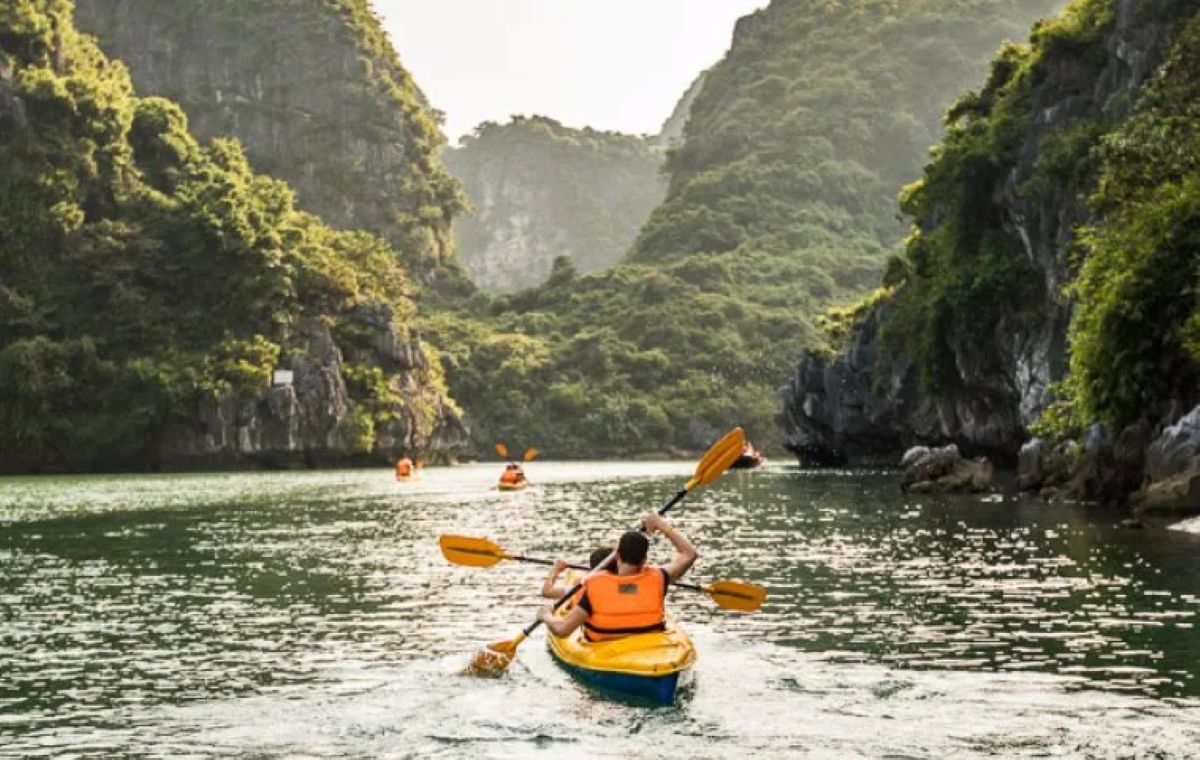
When you step off the boat onto the sun-bleached piers of Vietnam’s offshore islands you do not just smell salt—you feel a quiet revolution, in the air. For generations local fishermen reaped the seas to survive unknowingly bleeding their reefs dry. Today driven by heart and fierce local pride these same islanders are putting down their nets to become the oceans fiercest guardians. Across turquoise bays and hidden coves coastal families are reclaiming their waters proving that when a community unites to protect its marine home paradise does not just survive—it thrives.
Vietnam Pushes Community Tourism and Marine Protection in a Radical Blue Economy Revolution
Advertisement
Advertisement
Why is Vietnam suddenly halting mass coastal expansion to hand full control of its ocean sanctuaries back to local villagers? Furthermore, this dramatic blue revolution is reshaping tropical travel forever across legendary sites like Ha Long Bay and Nha Trang Bay. Consequently, marine ecosystems are recovering at unprecedented speeds. However, can local communities successfully balance eco-tourism revenues with strict marine preservation? Read on to uncover how Vietnam pushes community tourism and marine protection to rescue its paradise islands!
For decades, rapid economic growth and unbridled coastal construction threatened Vietnam’s delicate aquatic ecosystems, placing immense pressure on fragile marine life across famous island chains. Recognising the critical vulnerability of its marine environments, the Vietnamese central government initiated a total overhaul of national maritime policy. The primary goal is to establish a resilient blue economy that balances high-value green travel with strict environmental preservation. Rather than relying solely on top-down state enforcement, national policies now explicitly empower local coastal communities to become the primary custodians of their surrounding seas.
Advertisement
Advertisement
This strategic evolution relies heavily on legislative milestones such as Resolution No. 36-NQ/TW (Strategy for Sustainable Development of Vietnam’s Marine Economy to 2030, Vision to 2045). Under this mandate, the marine sector is framed as a crucial engine for economic growth, provided that development complies with strict ecological standards. Complementing this framework, Resolution No. 139/2024/QH15 enforces national marine spatial planning, delineating precise protected zones while allowing controlled, community-managed eco-tourism within designated buffer areas. Simultaneously, Decision No. 147/QD-TTg aims to generate between $130 billion and $135 billion in tourism revenue by 2030, explicitly prioritising sustainable community models over destructive mass travel.
How is Resolution No. 36-NQ/TW Reshaping Vietnam’s Marine Economic Strategy in Coastal Provinces?
Advertisement
Advertisement
Resolution No. 36-NQ/TW serves as the central blueprint driving Vietnam’s ambition to become a powerful, sustainable maritime nation by redirecting state resources toward protecting coastal habitats and restoring degraded coral reefs. Furthermore, this master policy recognises that marine tourism cannot flourish if local ecosystems suffer ongoing degradation from industrial runoff and unregulated commercial shipping.
By prioritising eco-friendly travel models, the state actively encourages local provinces to establish sustainable marine parks that directly protect endangered aquatic species. Consequently, coastal destinations across Quang Nam and Quang Ninh are successfully shifting away from high-impact commercial exploitation toward regenerative, community-driven conservation economies.
Advertisement
Advertisement
What Role Does Resolution No. 139/2024/QH15 Play in Marine Spatial Zoning Across Ha Long Bay and Nha Trang?
National Marine Spatial Planning under Resolution No. 139/2024/QH15 provides clear legal boundaries for human activities across Vietnam’s coastal waters by strictly categorizing marine areas into core preservation sanctuaries, commercial buffer zones, and regulated development sectors. In addition, complementary regional directives integrate coastal resource allocation with local community rights, granting coastal residents formal co-management powers over nearby marine zones.
This legal clarity protects small-scale community tourism operations from heavy industrial encroachment and destructive commercial fishing fleets. Furthermore, marine wardens in Khanh Hoa and Ha Long Bay can effectively enforce zoning laws without facing direct interference from unregulated commercial operators.
How Does Decision No. 147/QD-TTg Drive the National Green Tourism Shift in Quang Ninh and Khanh Hoa?
Advertisement
Advertisement
Decision No. 147/QD-TTg targets $130–135 billion in tourism revenues by 2030 through a mandatory transition toward environmentally friendly, high-value travel offerings across key coastal provinces. The state recognises that long-term economic growth depends entirely on preserving the natural beauty of key regions like Quang Ninh and Khanh Hoa.
Moreover, the strategy directs public investments directly into rural and coastal communities to construct eco-lodges, improve sanitation infrastructure, and sponsor hospitality training programs. Consequently, this policy transforms traditional fishing villages into world-class eco-tourism hubs that preserve indigenous culture while safeguarding coastal waters.
Why are the Cham Islands Leading Vietnam’s Marine Conservation Revolution in Quang Nam Province?
Located off the coast of Quang Nam Province, the Cham Islands Marine Protected Area stands as a successful model of community co-management where island authorities enforced a strict ban on single-use plastic bags. Furthermore, local authorities actively recruit traditional fishermen to serve as paid marine wardens and conservation rangers to monitor fragile coral reefs and deter illegal blast fishing.
These dedicated community patrols protect nesting sea turtles along pristine island beaches while guiding low-impact eco-tourists through educational marine trails. Consequently, visitor entry fees directly fund local reef restoration projects, proving that grassroots environmental stewardship yields both ecological recovery and stable community incomes.
How are Local Fishermen in Ly Son Retrained for Reef Stewardship and Eco-Tourism?
Advertisement
Advertisement
In Ly Son Island (Quang Ngai Province), community members are shifting away from destructive, extractive fishing methods through targeted vocational retraining initiatives that teach islanders to operate eco-friendly boat tours. Additionally, in locations across Ly Son and Nha Trang Bay (Khanh Hoa Province), local residents partner directly with marine scientists to run coral nurseries.
Villagers systematically plant and monitor nursery-grown corals, rapidly restoring damaged reef systems across heavily visited tropical dive sites. Consequently, former fishermen now champion coral protection, transforming local waters into vibrant, thriving habitats for diverse marine life.
What Makes Bai Tu Long National Park an Exemplary Eco-Tourism Model in Quang Ninh Province?
Situated in Quang Ninh Province, Bai Tu Long National Park balances strict marine and terrestrial conservation with low-impact community tourism by restricting large commercial cruise vessels from sensitive zones. The park allows local island households to guide kayak tours and mangrove educational walks, generating direct income while protecting critical coastal forests.
Protecting these mangrove wetlands safeguards crucial fish nursery grounds, maintaining wild fish populations and ecological balance across northern Vietnam. Consequently, travellers experience pristine natural wilderness while directly contributing to the financial well-being of indigenous families.
How is Cat Ba Biosphere Reserve Balancing Tourism with Marine Ecosystem Care in Haiphong?
Advertisement
Advertisement
The Cat Ba Biosphere Reserve in Haiphong demonstrates how community-led aquaculture tours can replace unsustainable wild harvesting by guiding visitors through sustainable fish farms and floating educational centers. In addition, strict zoning laws limit construction around sensitive marine habitats, preventing coastal degradation and preserving endangered regional wildlife.
Revenue generated from eco-tourism fees directly funds community recycling systems and continuous coastal clean-up campaigns across the reserve. Consequently, local residents maintain absolute control over their natural environment, ensuring long-term ecological resilience and sustainable economic growth.
What are the Primary Governance Challenges Facing Coastal Marine Protection Across Vietnam?
Despite clear policy directives, local Marine Protected Area (MPA) management boards face significant enforcement limitations because most local boards lack legal authority to arrest or fine major maritime violators. This operational hurdle requires highly coordinated joint operations with the Vietnam Fisheries Surveillance force and the national Border Guard.
Furthermore, securing sustainable long-term funding remains a continuous operational objective for regional conservation programs relying on initial grant funding from international organizations like the UNDP and GEF. Consequently, state authorities are actively designing self-sustaining environmental service fees to guarantee permanent financial independence for local marine parks.
What Concrete Metrics and Geographic Targets Drive Vietnam’s Marine Protection Network Expansion by 2030?
Advertisement
Advertisement
Vietnam is aggressively restructuring its coastal policy to expand its network of Marine Protected Areas (MPAs) from a negligible footprint to a comprehensive national sanctuary system. Under long-term master plans, the central government aims to establish 27 fully operational MPAs, expanding protected ocean coverage to encompass at least 6% of the nation’s sea area, which equals more than 442,230 hectares of ocean habitat. This ambitious strategy covers key ecological regions, including Hon Cau Marine Protected Area in Binh Thuan Province, Phu Quoc MPA in Kien Giang Province, Con Co MPA in Quang Tri Province, and Nui Chua National Park in Ninh Thuan Province.
Given that the country boasts a coastline stretching 3,260 kilometres alongside an Exclusive Economic Zone (EEZ) exceeding 1,000,000 square kilometres, expanding sanctuary networks represents a necessary structural pivot toward environmental durability. Transitioning from under 0.2% protected marine territory to a robust 6% national threshold safeguards vulnerable underwater ecosystems against industrial runoff, destructive bottom-trawling, and coastal erosion. By restricting commercial exploitation across these critical maritime zones, the state creates protected breeding grounds that support regional fish populations and improve marine biodiversity across the entire South China Sea basin.
How Does Marine Preservation Support Vietnam’s Macroeconomic Goals for the Blue Economy?
The integration of marine conservation into national macroeconomic planning reflects a fundamental shift toward building a high-value, resilient blue economy. Under comprehensive national development strategies and Resolution No. 36-NQ/TW, the government aims to generate $80 billion to $90 billion in annual travel revenues by 2030, with the broader marine economy directly generating 10% to 12% of national gross domestic product (GDP). This economic policy relies on attracting 45 million to 50 million international visitors alongside 160 million domestic travellers, making sustainable ocean tourism a primary driver of national economic stability.
Rather than pursuing unbridled mass tourism that threatens coastal natural capital, regional authorities across Quang Ninh, Da Nang, and Khanh Hoa are shifting toward high-value, low-impact travel models. By prioritizing community-managed eco-tours over high-density hotel developments, coastal provinces ensure that foreign exchange earnings directly enrich local island populations while preserving environmental assets. Protecting marine health ensures that high-spending global travellers continue visiting these coastal destinations, transforming environmental conservation from a financial burden into a profitable economic asset.
What Economic Shifts Occur as Coastal Fishermen Transition from Destructive Harvesting to Sustainable Eco-Tourism?
Advertisement
Advertisement
Decentralizing coastal management requires providing viable alternative livelihoods for fishing households that historically relied on overharvesting wild marine stocks. In early Marine Protected Area trial sites like Nha Trang Bay MPA in Khanh Hoa Province, introducing community co-management models triggered an immediate drop in commercial fishing participation, decreasing male workforce dependency from 79.8% to 76% as households redirected labor into hospitality and conservation roles. Similar economic shifts are taking place across the Bay Mau Coconut Forest in Hoi An (Quang Nam Province) and throughout the Cham Islands.
Former commercial net-fishermen are undergoing vocational retraining to become certified scuba instructors, eco-tour boat captains, cultural homestay hosts, and paid environmental rangers. Transitioning traditional fishers into eco-tourism service roles creates stable daily incomes while reducing extractive pressure on fragile coastal waters. Halting destructive harvesting practices like blast fishing and cyanide collection allows local reef ecosystems to regenerate naturally, turning former fishers into dedicated guardians of the marine habitats that sustain their new livelihoods.
How Are Community-Led Coral Nurseries and Species Monitoring Rehabilitating Degraded Marine Ecosystems?
Community involvement forms the backbone of active marine habitat restoration across Vietnam’s offshore island ecosystems. High-priority marine parks such as Nha Trang Bay house extraordinary biological wealth, sheltering over 350 species of hard corals, 250 distinct reef fish species, 122 crustacean species, and 112 mollusc species within their protected sanctuary zones. To preserve this fragile biodiversity, co-management associations in Ly Son Island (Quang Ngai Province) and Hon Mun MPA (Khanh Hoa Province) partner directly with marine scientists to manage community-led coral nurseries.
Local islanders systematically cultivate, propagate, and transplant thousands of coral fragments each year to restore reef zones damaged by severe weather and unregulated diving. These community-led restoration programs generate a documented biological spillover effect, where healthy marine life inside core sanctuaries reproduces and repopulates surrounding open waters. In just two to four years of community enforcement, monitored sanctuary areas show measurable increases in fish density and coral canopy cover, proving that grass-roots conservation successfully heals degraded underwater environments.
What Waste Elimination Frameworks and Circular Models Are Cleaning Vietnam’s Island Sanctuaries?
Advertisement
Advertisement
Severe marine plastic pollution poses an existential threat to island ecosystems, prompting coastal municipalities to enact strict circular economy frameworks and waste elimination mandates. The Cham Islands in Quang Nam Province led this movement by enforcing a total ban on single-use plastic bags and disposable packaging, cutting municipal solid waste across the island chain by over 70%. Building on this success, coastal cities like Da Nang and island hubs like Cat Ba in Haiphong are introducing solar-powered passenger boats and electric shuttle fleets to minimize fuel contamination and reduce carbon emissions across pristine waterways.
To finance ongoing waste handling, local governments are establishing environmental fee mechanisms that charge visitors a direct entry fee ranging from 10,000 to 20,000 VND. Revenue collected from these eco-fees funds island recycling operations, material sorting plants, and daily community beach clean-up crews. By eliminating plastic waste and requiring tourists to support local sanitation, island communities maintain pristine beaches that attract eco-conscious global travellers.
How Does Mangrove Eco-Tourism Protect Vital Coastal Wetlands and Store Blue Carbon?
Extensive mangrove wetlands serve as essential natural barriers that protect Vietnam’s low-lying coastline while absorbing atmospheric carbon dioxide. Protected biosphere reserves like Bai Tu Long National Park in Quang Ninh Province, Xuan Thuy National Park in Nam Dinh Province, and the Can Gio Biosphere Reserve safeguard tens of thousands of hectares of coastal mangrove swamps. From a global climate perspective, these coastal wetlands store 3 to 5 times more blue carbon per hectare than terrestrial tropical rainforests, making mangrove preservation a key driver in achieving national net-zero carbon goals by 2050.
Developing low-impact eco-tourism routes such as guided mangrove boardwalk tours and non-motorized kayaking circuits generates continuous revenue for nearby coastal villages without clearing sensitive wetlands. Protecting intact mangrove roots provides sheltered nursery grounds for juvenile fish, shrimp, and crab species, sustaining local offshore fisheries. Furthermore, dense mangrove forests act as natural breakwaters that absorb storm surges, shielding vulnerable coastal villages from extreme weather driven by global climate change.
What Targeted Measures Are Safeguarding Nesting Beaches for Endangered Marine Turtles?
Advertisement
Advertisement
Safeguarding endangered marine species requires dedicated local action along protected nesting beaches across Vietnam’s coastal island sanctuaries. Highly regulated sea turtle conservation programs operate in Con Dao National Park in Ba Ria – Vung Tau Province, Nui Chua National Park in Ninh Thuan Province, and the Cham Islands in Quang Nam Province. In the Con Dao archipelago alone, ranger units working alongside trained community volunteers hatch and release between 100,000 and 150,000 green sea turtle hatchlings into the ocean every year, achieving an exceptional hatchling survival rate exceeding 80%.
Trained local volunteers conduct nightly patrols along protected nesting beaches, relocating vulnerable turtle eggs away from high tides and tourist disturbance into secure incubation hatcheries. Once the eggs hatch, community groups organize controlled releases that allow tourists to observe green turtles without disrupting their natural instincts. Combining rigorous species protection with educational eco-tourism raises global awareness and generates steady funding for ongoing wildlife monitoring programs.
How Does Legal Co-Management Bridge the Enforcement Gap Between State Authorities and Island Communities?
Historically, top-down environmental regulations struggled due to insufficient local enforcement resources across remote island jurisdictions. To close this operational gap, legal frameworks under Decision No. 1117/QD-TTg and the Law on Fisheries grant local community co-management associations official legal authority to regulate marine resources alongside the Ministry of Agriculture and Rural Development (MARD) and the Ministry of Natural Resources and Environment (MoNRE). Empowering island villagers gives local residents a personal stake in preventing illegal fishing within their territorial waters.
Because local management boards lack formal arrest powers, community patrol units conduct joint maritime operations with the Vietnam Fisheries Surveillance force and the national Border Guard to stop illegal trawling. In addition, national pilot directives under Resolution No. 36-NQ/TW facilitate autonomous municipal conservation funds that retain entrance fees and tourism concession payments locally. Keeping financial resources within island communities ensures steady funding for patrol boat maintenance, monitoring equipment, and fair salaries for local environmental wardens.
The Final Horizon
Advertisement
Advertisement
Vietnam’s brave shift toward community‑led care proves that saving our oceans begins in the human heart. Vietnam’s people stand on these shores watching former fishermen gently cradle hatched sea turtles and you realise that this is far more than a policy shift it is a love letter to the sea. Vietnam’s choice of stewardship over exploitation breathes life back into coral reefs securing a vibrant future, for Vietnam’s children. The tide has finally turned along this coast leaving us with a enduring hope that human hands can heal the very paradise that Vietnam once threatened.
Frequently Asked Questions (FAQs)
1. What is the core objective of Vietnam’s marine strategy? Vietnam’s strategic directives aim to balance sustainable marine economic growth with biodiversity conservation by expanding the national Marine Protected Area network and empowering coastal communities through green tourism.
2. How do local communities benefit from Marine Protected Areas (MPAs)? Coastal residents gain legal co-management rights, allowing them to transition from extractive fishing into stable livelihoods as eco-tour guides, boat operators, homestay hosts, and paid conservation rangers.
3. Which Vietnamese destinations are leading in eco-tourism co-management? Key coastal areas leading this movement include the Cham Islands (Quang Nam), Ly Son Island (Quang Ngai), Nha Trang Bay (Khanh Hoa), Bai Tu Long National Park (Quang Ninh), and the Cat Ba Biosphere Reserve (Haiphong).

