Over 40 European countries and something like 200 cities in, I’ve got a pretty good feel of what works for me, and what rubs me up the wrong way as far as Euro getaways go.
Hard nos:
- Overpriced experiences you can definitely get for cheaper, and arguably better, in lesser-known dupes
- Ridiculously-crowded town centers where you’re constantly rubbing shoulders with strangers on your way to morning coffee
- Sprawling metropolises with an endless web of metro lines that will require longer than a week to unpack and complicated logistics
My green flags, you ask? How about the total opposite of everything that’s above?
If you love your Euro cities easy to navigate and somewhat-undiscovered, I’ve brought you 5 fully-walkable, pocket-sized gems that won’t require a pricey day pass just to cover transport alone:
Luxembourg City, Luxembourg
How many hours should you stay? 8-10 hours (an overnight if including Vianden)
Speaking of day passes, how about completely-free public transport?
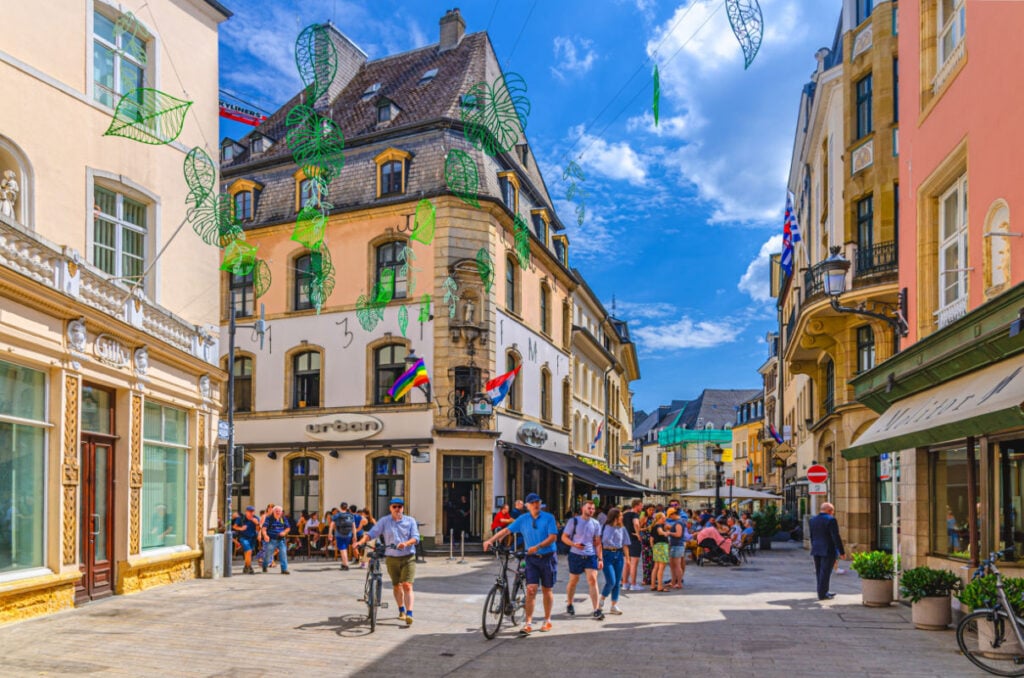
Luxembourg City is the tiny capital of the Grand Duchy of Luxembourg, a blink-and-you’ll-miss-it nation squished tight between France, Belgium, and Germany. What’s the main draw here other than the fact buses and trams are completely free, you ask?
Well, how about a UNESCO-listed, absolutely beautiful Old Town split in two:


There’s an Upper Town, perched on a rocky plateau overlooking a long valley, home to the Grand Duke’s palace, the twin-spire Notre-Dame Cathedral—the only one in the entire country—and cobbled lanes running along balcony-style ramparts.
Then it’s a leisurely 12-minutes on foot to Grund, the lower-lying ‘village within a city’. It hugs the base of the city’s imposing walls, and it’s where you’ll find those gorgeous pastel buildings and cozy café terraces lining a meandering Pétrusse River.
Visiting the whole of Historic Luxembourg won’t take you longer than 4 hours at a slow pace.
Once you’re done, you can either switch things up a bit with a 10-minute tram ride to Kirchberg, the ultra-modern, skyscraper-dotted district—where various EU agencies convene, by the way—or you could see Luxembourg beyond, well, just the city.


That free public transport covers, in fact, the entire Grand Duchy, and if you only have one day here, I highly recommend you take the local bus to Vianden, this cute castle town in the north. The ride takes about an hour each way, and the reward is one of Europe’s most photogenic hilltop castles.
Check The Local Travel Rules In Europe Before You Fly
Before you go, double-check the entry rules that apply to you.
U.S. passport holders get 90 days within any 180-day period across the Schengen Area, which covers Luxembourg and 30+ other countries, but the EU has been rolling out its new biometric entry system and the ETIAS pre-travel authorization, so confirm what’s live and in operation before you book.
Use the Entry Requirement Checker to pull the full documentation and stay on the clear side of border control.
Bruges, Belgium
Size: 54.44 sq mi (the Historic Center is only 1.66 sq mi)
How many hours should you stay? 5-6 hours
Belgium may just have the highest concentration of day-trip worthy destinations: whether it’s Ghent, Leuven, or even Brussels, which you can definitely fit into a single action-packed afternoon, this is a country best experienced in tidbits.
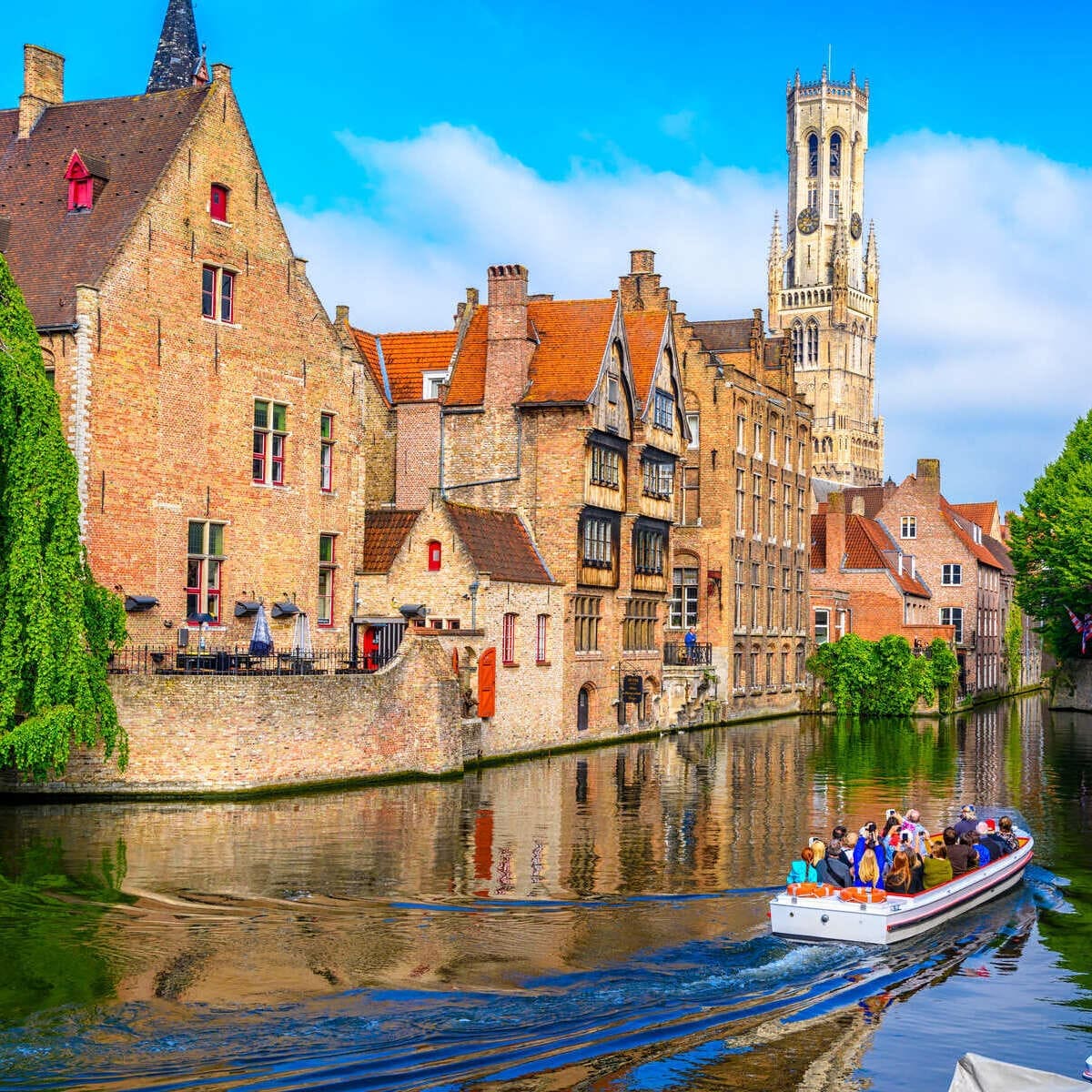
The best Belgian day trip for me is hands down Bruges. Think Amsterdam, just way cuter and with half the beer-buff British crowds: it’s this quaint Dutch-speaking town in the northwest of Belgium traversed by picturesque waterways.
You can either explore it on foot, and there are countless romantic stone bridges and canal walks to cross, or my favorite one, by boat.


Hop on a 30-minute canal tour starting from Rozenhoedkaai, that beautiful spot with wisteria-clad water-facing pubs, and you can see the bulk of Bruges in just over 30 minutes, passing under historic bridges, venturing into side canals, and admiring rows upon rows of stepped-roofed houses.
Of course, no visit to Bruges is complete without some exploration by foot. Swing by the Markt Square to try Belgium’s iconic frites in a local pub, and climb up the medieval Belfry of Bruges for sweeping views of the skyline.
Fair warning: it’s 366 steps, and the staircase narrows to a single-file squeeze near the top, so go early before lines form.
Note From The Editor
Just one sec! If you enjoy reading great human-written articles, the best way to see a few more is to follow us on Google so we become one of your preferred websites. Thank you so much for reading. Now back to the story!
Menton, France
How many hours should you stay? 3-4 hours (a little longer if you’re adding some beach time)
Tucked away on the eastern end of the French Riviera, at the point where it’s barely distinguishable from neighboring Liguria, in Italy, Menton is an under-the-radar Mediterranean spot most Monaco-bound influencers and Nice beachgoers are still blissfully sleeping on.
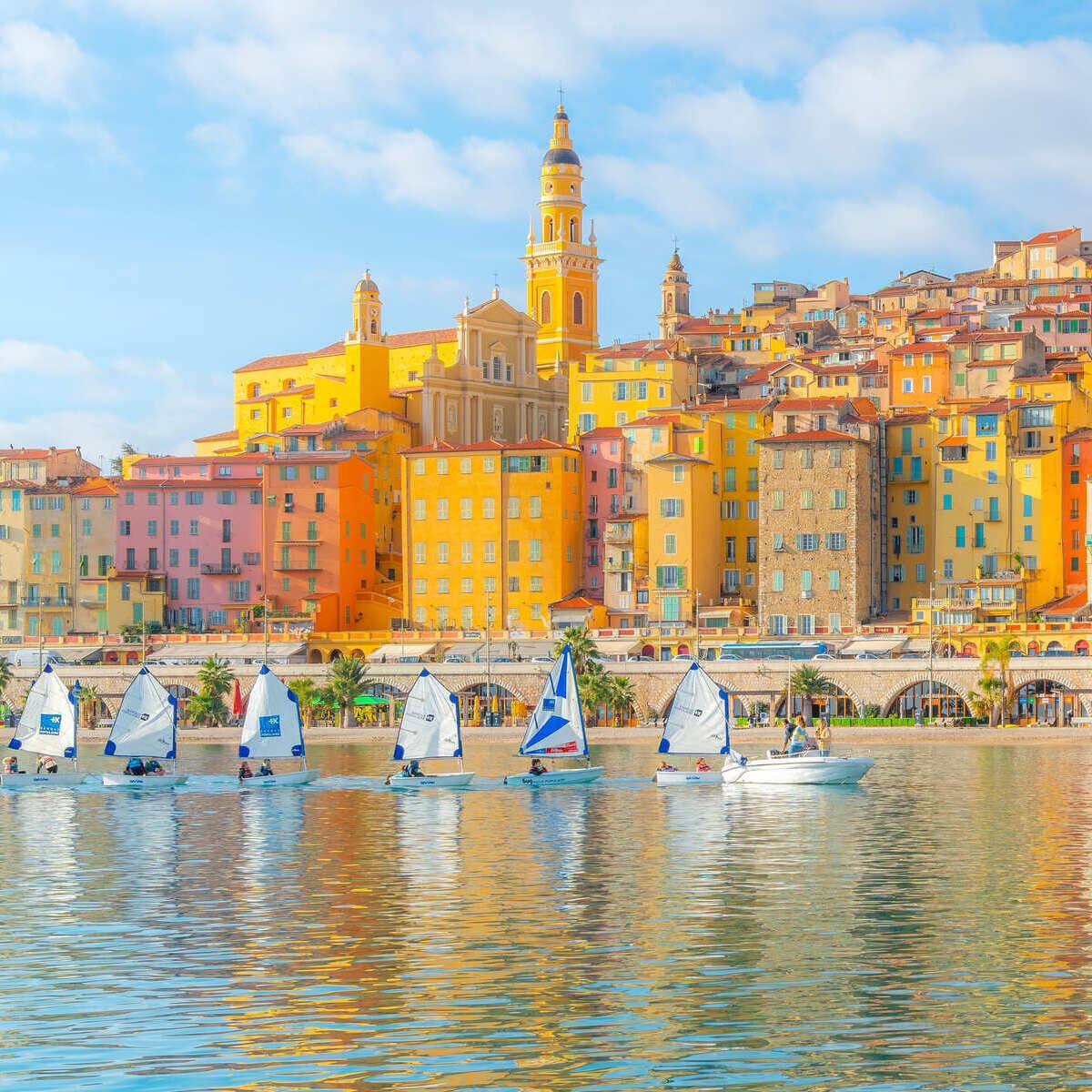
Its waterfront looks like something out of a dream, with vibrant-painted, slender buildings climbing a slight hill, tightly-packed together. They come in every imaginable color, from weathered-cream, to bright-coral, and every shade of ocher in between.


The best way to explore Menton is not by following a strict checklist, but rather getting lost in its uphill maze of cobblestone alleys. A good place to start are Les Rampes Saint-Michel, the unmissable Baroque staircase that takes you from the beachfront to the town’s yellow-washed basilica.
As cars can’t access the upper reaches of town, Menton is truly made for walkers, and in case you’re looking for a full Italian immersion while you’re at it, you can actually walk to the Italian border at Ponte San Ludovico in about 15 minutes.
Pro tip?
The absolute best time to visit Menton is not in summer, when the Riviera crowds surge, but rather in February, when it hosts the carnival-like lemon feast known as Fête du Citron: think beautiful floats built from over 140 tonnes of lemons, and just about every flavor of citrusy gelato you can conjure up.
Zagreb, Croatia


- Population: 767,000
- Size: 118.1 sq mi (the Historic Center covers only 2.5 sq mi)
- How many hours should you stay? Either a full day, or a single overnight is best
Though it’s a full-blown national capital with nearly 800,000 residents within its municipal bounds, Zagreb’s must-see landmarks are all packed together in one tiny, one-square-mile radius called the Old Town.
Unlike Luxembourg’s, the Croatian capital’s historic core is divided not in two, but three parts: Upper Town, Lower Town, and Kaptol. Which one’s the prettiest?
That one I’ll leave for you to decide, but it’s true that they say Lower Town is Zagreb’s buzzing heart:
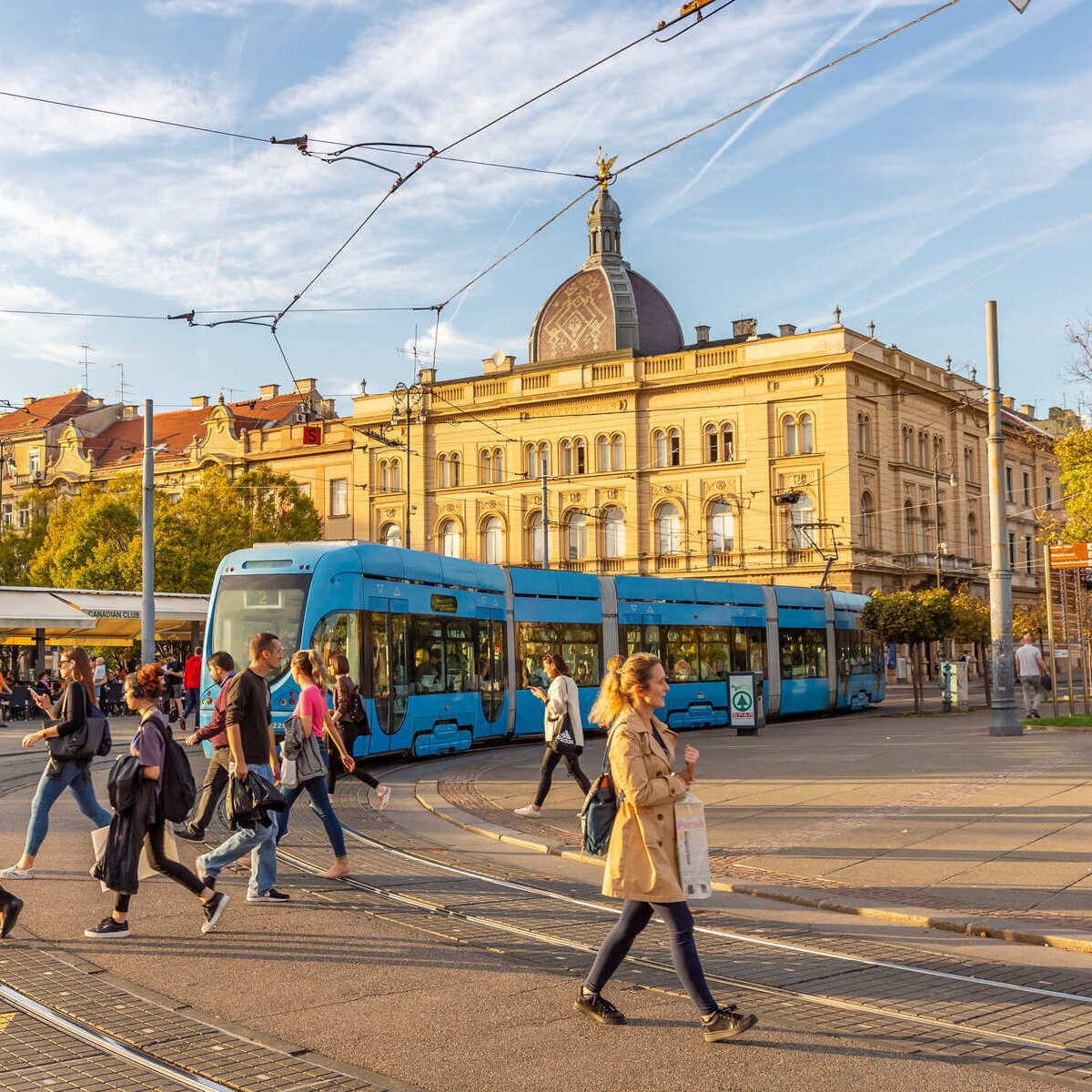
A city center of the sorts, it centers around a lively Ban Josip Jelačić Square, this pedestrian-friendly space flanked by elegant Habsburg buildings. This is where all of Zagreb’s grid-like boulevards, and its whole web of tram lines, meet, too.
The Zagreb Funicular, a 135-year-old cobalt-blue cog railway, takes you from Ilica, the main shopping street in the Lower Town, to the Upper Town in just 64 seconds.
At the top, you’re right at the foot of Lotrščak, this whitewashed, 13th-century defensive tower that still fires a commemorative cannon every day at noon.
The quirky Museum of Broken Relationships is a short 3-minute walk, with funny, and occasionally heart-wrenching recounts of ill-fated lovers, and a further 200 meters, you’ll find the stunning St. Mark’s Church, a 13th-century gem covered in colorful tiles that form the Croatian coat of arms.

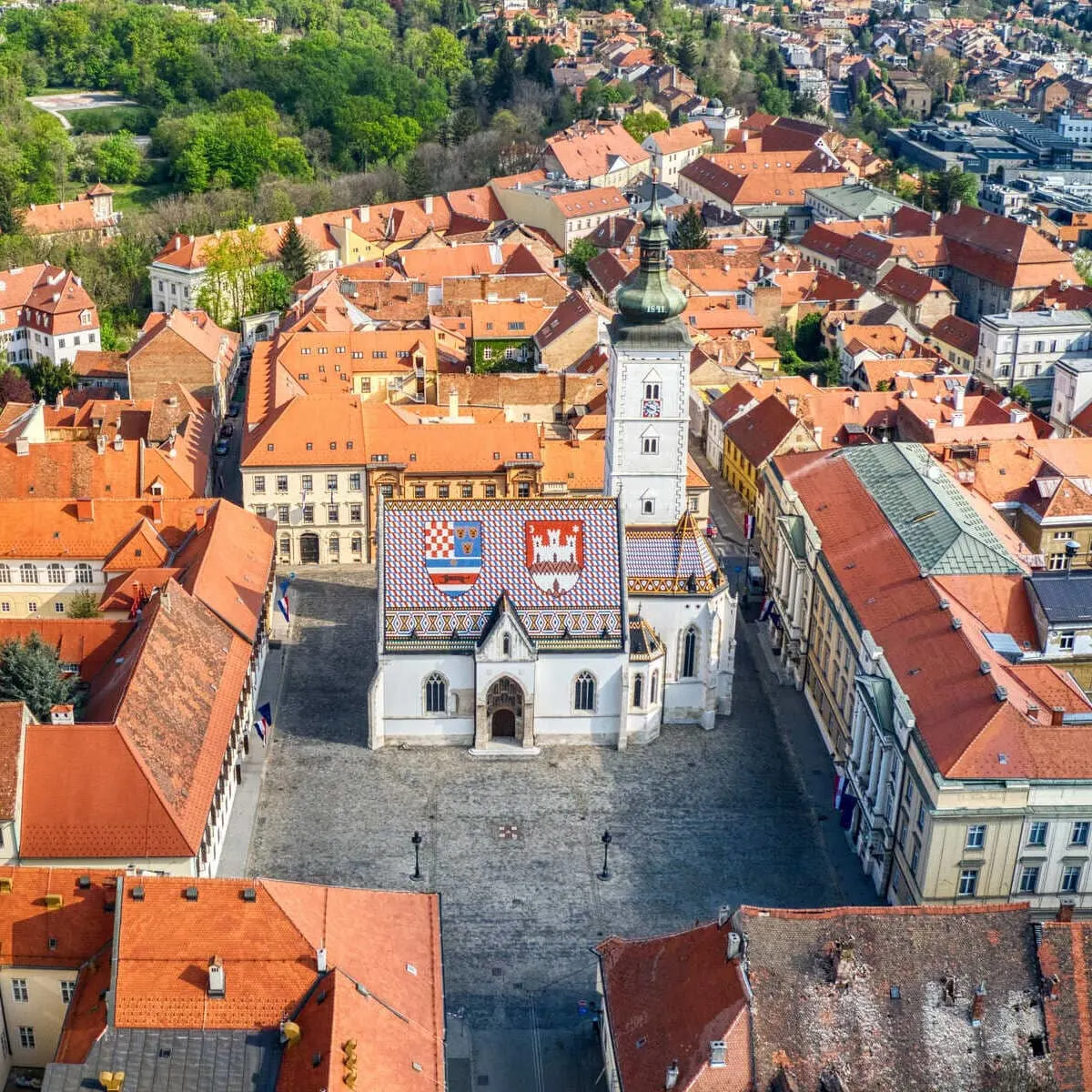
From here, it’s a 10-minute stroll to Kaptol, the last of the historic districts, best known for being the home of Zagreb’s towering cathedral, the tallest religious building in Croatia, and the lively Tkalčićeva, a bohemian zone filled with restaurant terraces spilling onto lamp-lit cobbles.
Of course, there’s a lot more Zagreb to discover. Small as the center may be, it’s a fairly-large city, and the more you dig, the more you’ll find.
From Mirogoj, a hauntingly beautiful 19th-century cemetery that rivals Paris’ world-famous Père-Lachaise, to the wooded slopes of Sljeme Mountain, there’s plenty to keep you busy here for 3 or even 4 days.
That said, if you’re only passing by on your way to the Adriatic Coast, the center is a perfectly-feasible 1-day outing without ever needing to hop on a rattling tram.
Ljubljana, Slovenia


Population: 302,800
Size: 63.2 sq mi (Old Town encompasses only 0.3 sq mi)
How many hours should you stay? 5-6 hours, or a full day if adding Lake Bled
A short two-hour train ride from aforementioned Zagreb will take you to Ljubljana, the picture-perfect, teeny-tiny capital of Slovenia.
You might know this country as Melania Trump’s homeland, I know it for peaceful Old Town streets, hearty goulash that won’t burn a hole through your wallet, and expansive mountain views from atop fairytale castles.
That’s already a pretty good description of Ljubljana, which truly feels like a slightly-above average small town wearing big administrative city boots that are too large to properly fit.
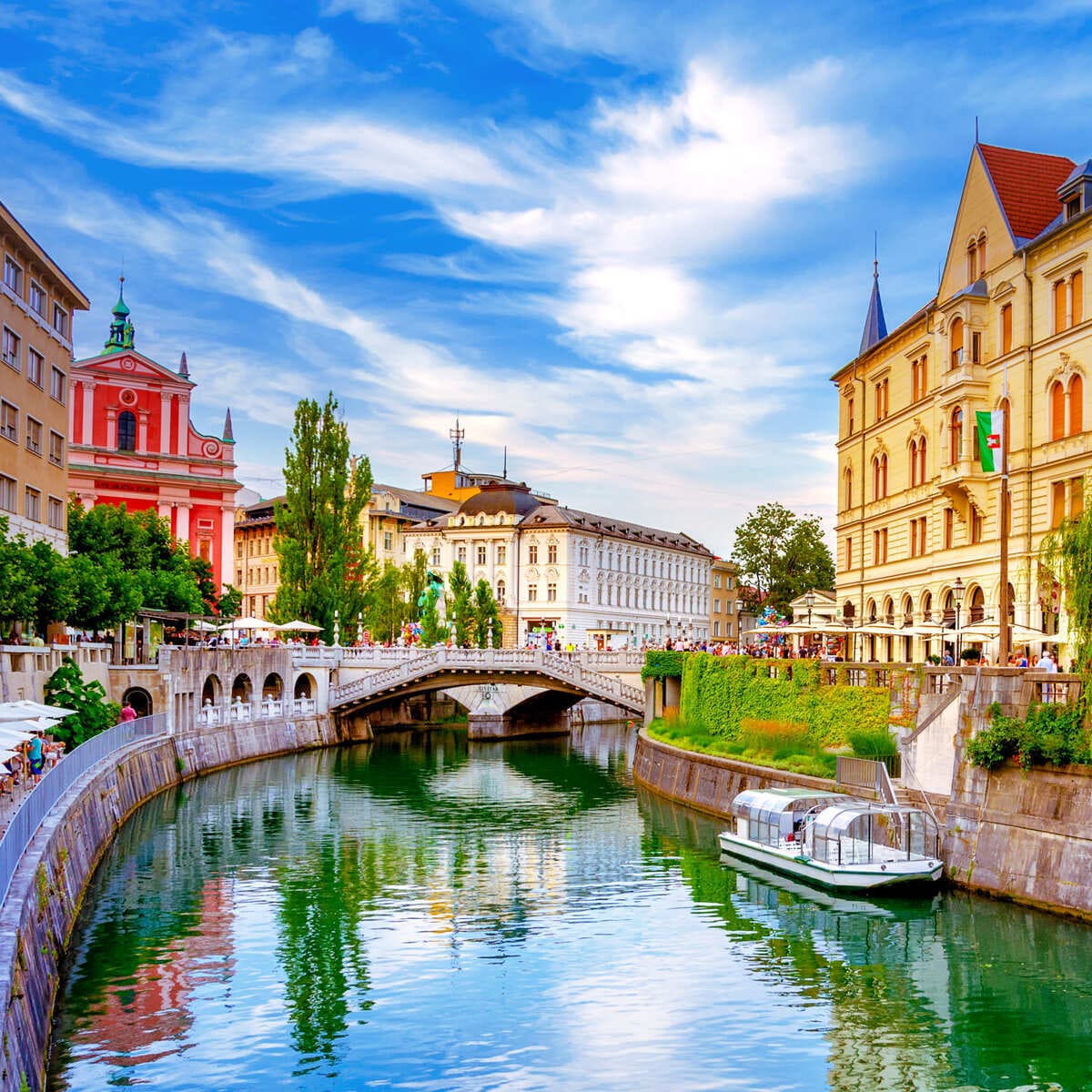
This has always been one of Europe’s quieter, more provincial ends, if you will, and capital status or not, the relaxed vibe shows: no metros, only a handful of tram lines connecting what’s otherwise a fully-walkable Old Town to the largely-residential outer suburbs, and sudden riverside promenades every few steps.
Whether it’s the dragon-guarded bridges spanning the alpine Ljubljanica River, or the scenic path that leads to Ljubljana Castle, passing cobbled lanes lined with gorgeous Habsburg façades, this is the kind of town that doesn’t hit you with a showstopper, but slowly wins you over by the end of the day.
Not gonna lie, the $4 pints of Union beer do help.
I was only ever in Ljubljana, or Slovenia as a whole, for a day myself, and even then I was able to side quest it to Lake Bled, that iconic crystal-clear lake fringed by the Julian Alps with a church in the middle—that’s only a 75-minute bus ride from town, and it’d be a shame to miss it.
Just saying.
FREE PUBLIC TRANSIT
Luxembourg City
TAP TO REVEAL
UPPER TOWN AND GRUND
Explore a UNESCO-listed Old Town with completely free public transport, split between a rocky plateau and the lower-lying Grund village.
TAP TO CLOSE
BELGIAN WATERWAYS
Bruges, Belgium
TAP TO REVEAL
CANAL TOURS AND BELFRY
Traverse picturesque stone bridges on foot or by boat, climb the medieval Belfry for skyline views, and enjoy iconic frites in Markt Square.
TAP TO CLOSE
FRENCH RIVIERA
Menton, France
TAP TO REVEAL
COLORFUL CLIFFSIDE ALLEYWAYS
Wander through vibrant pastel buildings climbing uphill from the Mediterranean, just a 15-minute walk from the Italian border.
TAP TO CLOSE
CROATIAN CAPITAL
Zagreb, Croatia
TAP TO REVEAL
HISTORIC CORE DISTRICTS
Discover compact historic districts across Upper Town, Lower Town, and Kaptol, featuring a 135-year-old funicular and St. Mark’s Church.
TAP TO CLOSE
ALPINE CAPITAL
Ljubljana, Slovenia
TAP TO REVEAL
RIVERSIDE PROMENADES
Enjoy peaceful Old Town streets, dragon-guarded bridges over the Ljubljanica River, and four-dollar pints of local Union beer.
TAP TO CLOSE
Enter your email address to subscribe to Travel Off Path’s latest travel news, straight to your inbox