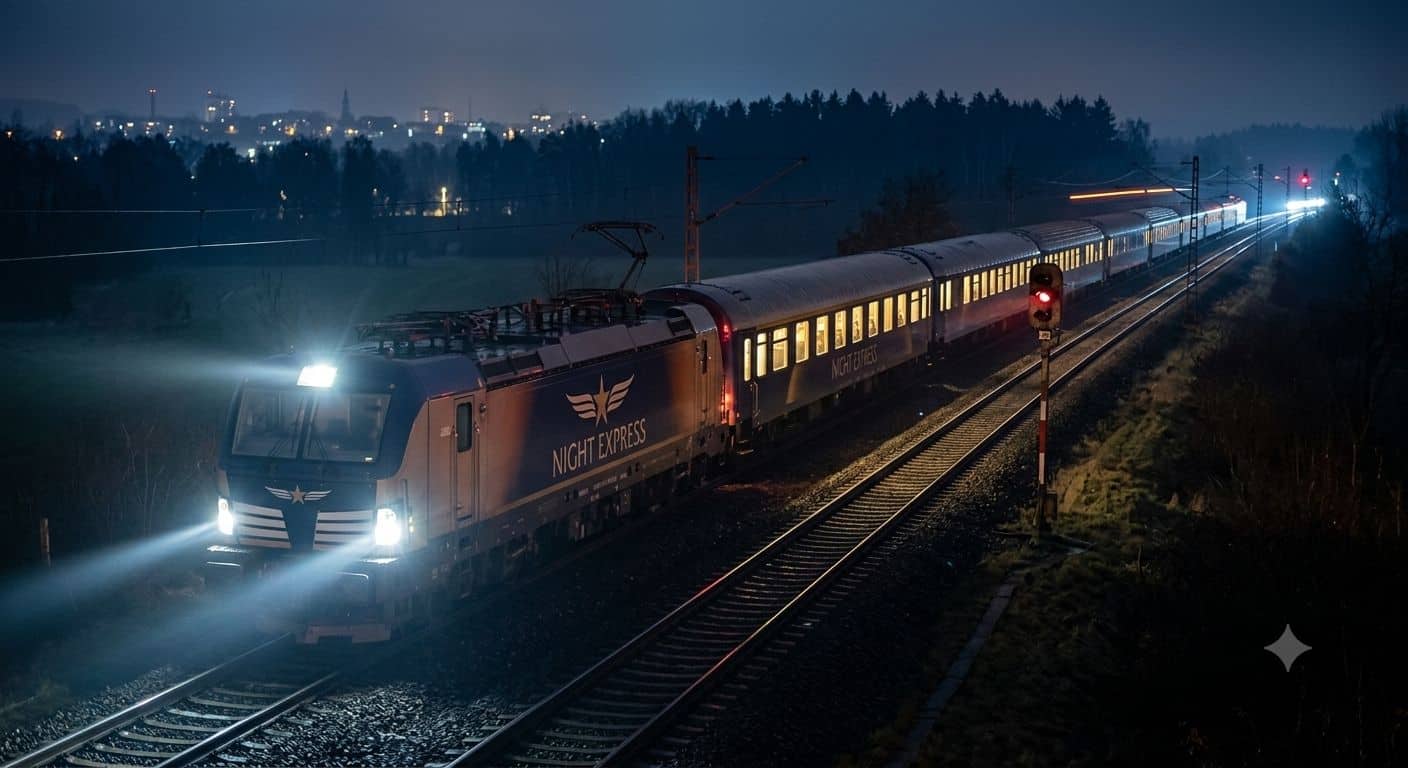
Hamburg follows Munich and more as Germany prepares to welcome exciting new night train adventures in March 2027. These overnight rail holidays put Germany’s travel possibilities in the spotlight, connecting iconic cities with a fresh approach to exploring the country. Moreover, Hamburg, Munich, Bremen and Augsburg offer travellers opportunities to discover historic landmarks, vibrant culture and memorable city breaks. As new night train adventures attract attention, Germany’s ultimate overnight rail holidays could appeal to tourists seeking convenient travel options. Travel And Tour World invites global travellers to explore the route, onboard facilities and destinations shaping Germany’s next chapter in overnight rail travel.
Europe’s Night Train Revival: Hamburg–Munich, Major Sleeper Routes, Tourism Statistics and Travel Planning for 2027
The planned Hamburg–Munich overnight service offers an opportunity to examine Europe’s wider night-train network, the destinations travellers can reach while sleeping, and the tourism statistics that make rail-based city breaks attractive. For international visitors, overnight trains can connect multiple cities without requiring a separate daytime journey, although fares, journey times, onboard facilities and operating frequencies differ considerably.
Advertisement
Advertisement
The following extension brings together the announced Nox Mobility service, established European sleeper routes, five-year tourism comparisons where published data are available, and practical planning guidance. It distinguishes confirmed service information from proposed future plans and avoids treating hotel overnight stays as a count of individual visitors.
The Hamburg–Munich night train and its travel implications
Nox Mobility’s announced route is scheduled to begin on 23 March 2027. The planned service will connect Hamburg, Bremen, Augsburg and Munich, operating three times weekly in each direction. Its announced starting fare is €65 one way, subject to availability and the final booking conditions.
Table 1. Announced Hamburg–Munich service details
| Feature | Announced information |
|---|---|
| Planned launch | 23 March 2027 |
| Operator | Nox Mobility |
| Northern terminus | Hamburg |
| Southern terminus | Munich |
| Intermediate stops | Bremen and Augsburg |
| Frequency | Three times weekly in each direction |
| Starting one-way fare | €65 |
| Southbound Hamburg departure | 21:22 |
| Southbound Bremen departure | Approximately 22:30 |
| Southbound Augsburg arrival | Approximately 07:35 |
| Southbound Munich arrival | 08:14 |
| Northbound Munich departure | 21:20 |
| Northbound Augsburg departure | Approximately 21:51 |
| Northbound Bremen arrival | Approximately 07:20 |
| Northbound Hamburg arrival | 08:27 |
| Initial accommodation | Individual Nox Suites with seat-based reclining space |
| Planned later accommodation | Nox Rooms for one or two people, expected from 2029 |
Source: Nox Mobility launch details reported by Euronews. All times are local and remain subject to the operator’s final timetable.
The advertised schedule suggests a journey of approximately 10 hours and 52 minutes from Hamburg to Munich. The reverse journey is approximately 11 hours and seven minutes. These durations are calculated from the announced departure and arrival times, not guarantees of actual journey time.
Advertisement
Advertisement
For tourists, the main benefit is the ability to travel overnight and arrive in another city in the morning. However, a reclining suite should not automatically be treated as equivalent to a conventional sleeper cabin with a fully flat bed.
Europe’s major night-train routes for international travellers
Europe’s overnight rail network includes international sleeper services, domestic night trains and seasonal routes. The following operators offer useful alternatives for visitors comparing routes beyond Germany. Timetables and operating days can change, so travellers should confirm availability for their specific dates.
Advertisement
Advertisement
Table 2. Major European night-train networks
| Operator or service | Main route or corridor | Principal destinations | Best suited to |
|---|---|---|---|
| ÖBB Nightjet and EuroNight | Central Europe to western and southern Europe | Vienna, Zurich, Amsterdam, Hamburg, Rome and Venice, depending on service | International city breaks |
| European Sleeper | Paris–Berlin, Brussels–Prague and Brussels–Milan | France, Germany, Belgium, Czechia and Italy | Cross-border itineraries |
| Snälltåget | Berlin–Hamburg–Copenhagen–Malmö–Stockholm corridor, with date-dependent operations | Germany, Denmark and Sweden | Northern European city trips |
| SJ night trains | Stockholm–Hamburg, Stockholm–Malmö and routes towards northern Sweden and Norway | Hamburg, Stockholm, Umeå, Kiruna and Narvik, depending on service | Scandinavia and Arctic travel |
| VR Finnish night trains | Helsinki and southern Finland towards Rovaniemi, Kolari and Kemijärvi | Finnish Lapland | Northern lights, winter sports and nature |
| Trenitalia Intercity Notte | Multiple north–south Italian routes | Milan, Turin, Rome, Lecce, Sicily and other destinations | Exploring Italy without a full daytime rail journey |
| Trenitalia–ÖBB EuroNight | Italy towards Austria and southern Germany | Vienna, Salzburg, Graz and Munich, depending on service | Combining Italy with Central Europe |
| Caledonian Sleeper | London to Scottish destinations | Edinburgh, Glasgow, Aberdeen, Inverness and Fort William | Scotland’s cities and Highlands |
| Great Western Railway Night Riviera | London Paddington–Penzance | Cornwall and southwest England | Coastal holidays and regional exploration |
Route coverage is indicative, not a guarantee that every listed destination is served by one direct train on every date. Operators publish date-specific timetables and route changes.
ÖBB Nightjet and EuroNight
ÖBB Nightjet is among the most extensive options for overnight international travel in Europe. Its published network covers more than 25 major cities and holiday destinations, with routes serving places such as Vienna, Zurich, Amsterdam, Hamburg, Berlin, Munich, Rome, Venice and Brussels. Some connections operate under the EuroNight name in partnership with other national railways. Accommodation varies from seats and couchettes to sleeper compartments, including some private options. Travellers should choose the appropriate category before paying because not every train carries the same accommodation types.
European Sleeper
European Sleeper provides international overnight services linking Paris and Berlin, Brussels and Prague, and Brussels and Milan, according to its published network. These routes can help tourists combine major cultural cities without returning to a single airport hub. Its accommodation choices include seats, couchettes and sleeper berths, with private-compartment bookings available in some categories and subject to availability. The company also offers selected connections with London through connecting services. Passengers should check departure days and connection conditions carefully, particularly when building a multi-country itinerary.
Snälltåget
Snälltåget’s Berlin–Stockholm corridor links Germany and Sweden through Hamburg, Copenhagen and Malmö on scheduled operating dates. Some departures also serve Dresden, while the company offers onward daytime connections towards destinations including Gothenburg and Oslo through Malmö. Its timetable is seasonal and can change around engineering works or other operating requirements. Travellers should check the date-specific schedule rather than assume daily service. The route is particularly useful for visitors wanting to combine Berlin’s museums and historic landmarks with Copenhagen’s urban attractions and Stockholm’s waterfront setting.
Advertisement
Advertisement
SJ’s Swedish overnight services
SJ’s night-train network connects Stockholm with southern and northern Swedish destinations. Published route information includes Stockholm–Hamburg, Stockholm–Malmö, Stockholm–Umeå and services towards Kiruna and Narvik, depending on the timetable. These journeys are especially useful for travellers planning winter holidays, Arctic scenery or long-distance trips across Scandinavia. Because the distances are substantial, an overnight train can make better use of travel time than a separate daytime journey. Visitors should verify cross-border availability, sleeper accommodation and connections before booking.
VR Finnish night trains
Finland’s VR operates overnight services from southern Finland towards Rovaniemi, Kolari and Kemijärvi. The network provides access to Lapland’s winter-sports areas and northern landscapes, with onward buses or other ground transport sometimes needed to reach individual resorts. VR publishes cabin options, including two-person compartments and cabins with showers. The operator also permits vehicles on selected services, allowing travellers to continue their holiday by car. Cabin prices and availability vary by date, so early comparison is sensible for popular winter travel periods.
Trenitalia Intercity Notte
Italy’s Intercity Notte network provides overnight links across the peninsula, including routes between Turin, Milan or Rome and destinations in southern Italy. Published connections include Lecce, Salerno, Reggio Calabria, Messina, Syracuse and Palermo, with other services towards destinations such as Trieste and Bolzano on particular days. Trenitalia lists 24 daily connections across its network, although this figure represents connections rather than 24 distinct destinations or 24 trains on every route. The service offers different seating and sleeping arrangements, making it relevant to travellers combining northern Italian cities with southern regions and Sicily.
Trenitalia–ÖBB EuroNight
International EuroNight services connect Italy with Austria and southern Germany. Trenitalia’s published information identifies overnight links towards Vienna, Salzburg, Graz and Munich, while the wider Nightjet network provides additional Italian connections depending on the season and timetable. These routes can suit travellers who want to combine Italian city stays with Austrian cultural destinations or Bavaria. Before booking, passengers should confirm the exact departure station, whether the service is direct, and which operator manages the chosen train.
Caledonian Sleeper and Night Riviera
The Caledonian Sleeper connects London with Scottish destinations, including Edinburgh, Glasgow, Aberdeen, Inverness and Fort William, using routes that vary by service. It can be useful for tourists planning Highlands excursions or a multi-stop Scotland holiday. In southwest England, Great Western Railway’s Night Riviera links London Paddington with Penzance, providing overnight access to Cornwall. These British services differ from continental cross-border trains, but both allow travellers to use sleeping hours for longer journeys. Timetables, cabin categories and station stops should be checked directly with each operator.
Germany’s tourism recovery over five years
Germany’s national tourism figures provide important context for the proposed night-train service. According to Germany’s Federal Statistical Office, accommodation establishments recorded approximately 302.3 million overnight stays in 2020 and 310.2 million in 2021. The total reached 450.7 million in 2022, followed by 487.1 million in 2023 and 496.0 million in 2024. In 2025, Germany recorded a new national record of 497.5 million overnight stays.
Advertisement
Advertisement
Table 3. Germany’s annual accommodation overnight stays
| Year | Overnight stays | Annual change |
|---|---|---|
| 2020 | 302.3 million | — |
| 2021 | 310.2 million | +2.6% |
| 2022 | 450.7 million | +45.3% |
| 2023 | 487.1 million | +8.1% |
| 2024 | 496.0 million | +1.8% |
| 2025 | 497.5 million | +0.3% |
Figures are rounded. Annual changes are calculated from the published totals; 2025 figures were reported as preliminary results.
The figures show that Germany’s accommodation sector recovered substantially after the sharp disruption of 2020 and 2021. The 2022 total was approximately 49% higher than in 2021. By 2024, the national total had exceeded the 2019 level of 495.6 million overnight stays.
The 2025 results show a different pattern. Domestic guests generated 413.7 million overnight stays, while international guests accounted for 83.8 million. International overnight stays fell by 1.8% compared with 2024, partly reflecting the exceptional demand associated with the UEFA European Football Championship in 2024. Domestic overnight stays increased by 0.7%.
These figures measure overnight stays, not unique travellers. One person staying for five nights contributes five overnight stays. They also cover Germany nationally, rather than visitors travelling specifically by train.
Hamburg tourism statistics and five-year comparison
Hamburg is the northern gateway of the planned Nox Mobility route. Official statistics from Statistikamt Nord provide a consistent annual series for accommodation establishments with at least ten beds, excluding campsites.
Table 4. Hamburg’s overnight stays, 2020–2024
| Year | Domestic overnight stays | International overnight stays | Total overnight stays |
|---|---|---|---|
| 2020 | 5,651,442 | 1,145,534 | 6,796,976 |
| 2021 | 6,240,791 | 1,239,458 | 7,480,249 |
| 2022 | 11,529,229 | 3,045,500 | 14,574,729 |
| 2023 | 12,267,167 | 3,510,709 | 15,777,876 |
| 2024 | 12,209,628 | 3,746,181 | 15,955,809 |
Source: Statistikamt Nord. Figures exclude campsites and establishments with fewer than ten beds.
Advertisement
Advertisement
Hamburg recorded approximately 6.80 million overnight stays in 2020. The figure increased to 7.48 million in 2021 before reaching 14.57 million in 2022. In 2023, the total rose to 15.78 million and reached nearly 15.96 million in 2024.
International overnight stays increased from approximately 1.15 million in 2020 to 3.75 million in 2024. Their share of the city’s total accommodation overnight stays also rose, from 16.9% in 2020 to 23.5% in 2024. This provides useful context for Hamburg’s appeal to overseas visitors.
The planned night train may make Hamburg easier to incorporate into a broader German itinerary. Visitors could spend several days exploring the harbour, Speicherstadt and Elbphilharmonie before continuing south. However, the tourism statistics do not establish how many visitors will use the new service.
Munich tourism statistics and five-year comparison
Munich is the southern terminus of the proposed route and one of Germany’s important destinations for cultural tourism, major events and business travel.
Table 5. Munich’s accommodation overnight stays, 2020–2024
| Year | Overnight stays | Annual change |
|---|---|---|
| 2020 | 7.03 million | — |
| 2021 | 7.95 million | +13.0% |
| 2022 | 16.02 million | Approximately +101.5% |
| 2023 | 18.63 million | +16.3% |
| 2024 | 19.70 million | +5.8% |
Figures are rounded from annual tourism reports published by Munich Tourism. Establishment coverage and reporting definitions should be considered when comparing city statistics.
Munich recorded approximately 7.03 million overnight stays in 2020 and 7.95 million in 2021. The total then reached around 16.02 million in 2022, followed by 18.63 million in 2023. In 2024, the city registered approximately 19.7 million overnight stays, its highest annual total since records began in 1912.
Advertisement
Advertisement
The city’s 2024 report also recorded approximately 8.9 million overnight stays by international guests, 9% more than in 2023. The United States was its largest international source market, accounting for approximately 1.49 million overnight stays. The United Kingdom contributed around 655,000, while Italy contributed approximately 587,000.
Major concerts, sporting events, exhibitions and Oktoberfest contributed to Munich’s travel appeal in 2024. The annual report recorded 19.7 million overnight stays despite a shorter average stay of 2.12 days. These figures underline the importance of events when planning accommodation and rail travel during busy periods.
6. Comparing Hamburg, Munich and Germany
Table 6. Accommodation demand across the two cities
| Year | Hamburg overnight stays | Munich overnight stays | Germany overnight stays |
|---|---|---|---|
| 2020 | 6.80 million | 7.03 million | 302.31 million |
| 2021 | 7.48 million | 7.95 million | 310.20 million |
| 2022 | 14.57 million | 16.02 million | 450.71 million |
| 2023 | 15.78 million | 18.63 million | 487.11 million |
| 2024 | 15.96 million | 19.70 million | 496.03 million |
Sources: Statistikamt Nord, Munich Tourism and Destatis. City totals may use different accommodation coverage and should be interpreted as indicators rather than perfectly comparable measures.
The figures reveal a strong recovery in both cities after the pandemic-era lows. Munich’s recorded overnight stays exceeded Hamburg’s in every year shown, while Germany’s nationwide total reached almost half a billion overnight stays in 2024.
For travellers, the comparison supports a practical itinerary: start in Hamburg, explore northern Germany, travel overnight through Bremen and Augsburg, and finish in Munich. A return journey could then be combined with further rail connections to other European destinations.
The statistics do not prove that overnight trains generate higher tourism demand. They do, however, demonstrate the scale of the accommodation markets that a direct overnight connection could serve.
Advertisement
Advertisement
How international tourists should plan a European night-train holiday
Before booking, compare the full journey rather than looking only at the headline ticket price. A €65 starting fare may not be available on every departure, and additional costs can include station transfers, luggage services, meals and accommodation before or after the train journey.
Check whether the ticket includes a seat, couchette or sleeper compartment. Travellers who need a fully flat bed, private bathroom or accessible accommodation should verify these details before purchasing. The planned Nox Suites are not the same product as the Nox Rooms expected from 2029.
Visitors should also leave sufficient time between separate tickets. An overnight train can arrive late, and a missed flight or international rail connection may not be protected when booked separately. For popular events, including Oktoberfest in Munich, reserving accommodation early is sensible.
For travellers comparing environmental impact, railway operators often promote overnight rail as an alternative to flying or driving. Actual emissions depend on the route, electricity mix, occupancy and the comparison method used, so broad environmental claims should be checked against transparent, route-specific data.
Conclusion
In conclusion, Hamburg follows Munich and more into the spotlight as Germany prepares to introduce a new overnight rail adventure in March 2027. With planned stops in Bremen and Augsburg, the Hamburg–Munich night train offers travellers another way to discover Germany’s historic cities, cultural attractions and regional experiences. Moreover, private passenger suites and overnight departures could make multi-city holidays more convenient for international tourists. As Europe’s night train network attracts renewed attention, travellers should check confirmed schedules, ticket prices and onboard facilities before booking. Travel And Tour World encourages readers to follow these developments and explore Germany through a memorable rail holiday.