The Gokyo Lakes trek climbs to a chain of six turquoise glacial lakes sitting above 4,700 m (15,420 ft) in Nepal’s Everest region, and by crossing the 5,420 m (17,782 ft) Cho La Pass, you can link it with Everest Base Camp in a single trek.
Most trekkers assume they need to pick between the classic Base Camp trail and the quieter Gokyo Valley. A single high pass connects both, and it only adds around three days to a standard EBC itinerary. I hiked this entire route independently as part of the Everest Three Passes trek, and I’d call the Gokyo and EBC combination the sweet spot of the Khumbu: the lakes, the view from Gokyo Ri, a real 5,000-meter pass, and Base Camp in one trip.
In this guide, I’ll break down your three route options, a full 14-day itinerary, a realistic look at the Cho La crossing, and some tips from my experience.
Gokyo Lakes Trek Overview
The Gokyo Lakes trek follows the Gokyo Valley, one valley west of the main Everest Base Camp trail in Sagarmatha National Park. The trail climbs alongside Nepal’s largest glacier, the Ngozumpa, to a string of six glacial lakes and the small Sherpa settlement of Gokyo at 4,790 m (15,715 ft).
| Gokyo Lakes Only | Gokyo + EBC via Cho La | |
|---|---|---|
| Distance | ~90 km (56 mi) return | ~150 km (93 mi) loop |
| Duration | 7-10 days | 14-16 days |
| Highest point | Gokyo Ri, 5,357 m (17,575 ft) | Kala Patthar, 5,644 m (18,517 ft) |
| Difficulty | Moderate | Challenging (Cho La Pass) |
| Permits | 7,000 NPR (~US$50) total | Same |
| Guide required? | No, independent trekking is allowed | Same |
| Best season | March-May, October-November | Same |
| Start / finish | Lukla | Lukla |
| Accommodation | Teahouses every night | Teahouses every night |
You sleep in teahouses the entire way, so there’s no camping gear involved. Rooms in the Gokyo Valley are also some of the cheapest I paid for in the Khumbu, as low as 200 NPR at the Namaste Lodge in Gokyo itself.
Keep in mind the lakes don’t always look like the photos. When I arrived in early spring they were still frozen over and white. The turquoise color comes through once the ice melts, so hike in late spring or autumn if that view is the priority.
If you only have a week, the out-and-back Gokyo Valley trek is a worthy trip on its own. This guide focuses on the full version: up the Gokyo Valley, over the 5,420 m (17,782 ft) Cho La Pass, and onto the classic trail to Everest Base Camp – this is the right way to do it without doing all Three Passes!
Gokyo Lakes Trek Route Options
There are three sensible ways to build a trek around the Gokyo Lakes. They share the same first two days out of Lukla, so you can even decide at Namche once you know how your body is handling the altitude.
Option 1: Classic Gokyo Valley Trek (7-10 Days)
The straight Gokyo Valley trek runs Lukla, Namche, Dole, Machhermo, Gokyo, and back the same way. Most people summit Gokyo Ri and spend a day exploring the upper lakes before turning around.
This is the quietest and cheapest option, and the only one without a pass crossing. The trade-off is obvious: you come home without seeing Everest Base Camp. Best for trekkers on a tight timeline or anyone wanting a calmer first Himalayan trek.
Option 2: Gokyo Lakes to Everest Base Camp via Cho La Pass (14-16 Days)
The route this guide covers. You trek up the Gokyo Valley, cross the 5,420 m (17,782 ft) Cho La Pass, and join the classic EBC trail at Lobuche. From there it’s Base Camp, sunrise on Kala Patthar, and a descent down the main trail through Tengboche.
Both directions work, but I recommend Gokyo-first. The valley’s shorter stages spread your acclimatization more evenly, and you climb Cho La’s infamous loose western side instead of sliding down it. I descended that side without microspikes, and my knees still remember.
Best for anyone with two weeks who wants the full Everest experience without repeating trail.

Option 3: The Everest Three Passes Trek (17-20 Days)
The Three Passes trek takes this same loop and adds Kongma La (5,545 m) and Renjo La (5,345 m) on either end. It’s the complete tour of the Khumbu, and the version I hiked over 20 days.
Only pick this if you’re confident at altitude and have close to three weeks on the ground. If you’re weighing it up, cross Cho La first on Option 2; you’ll know by then whether two more passes sounds like a dream or a threat.
My 14-Day Gokyo Lakes and EBC Trek Itinerary
This is the Everest Base Camp and Gokyo Lakes trek itinerary I’d hand a friend, or how I’d personally do it if I were going again. It’s built from the stages I hiked on my Three Passes loop.
It runs Gokyo-first, includes two proper acclimatization days, and assumes you fly in and out of Lukla.
Days 1-2: Lukla to Namche Bazaar
Land in Lukla (2,860 m) and walk the easy three hours down to Phakding (2,610 m) the same morning. Rooms here are some of the cheapest on the trail; I paid 200 NPR at the Trekker’s Lodge, and dal bhat runs about 500 NPR everywhere.
Day 2 is the first real work: six hours up the Dudh Kosi, across the high suspension bridges, and up the long hill to Namche Bazaar (3,440 m). Expect around 1,000 NPR for a room in Namche.

Day 3: Acclimatization in Namche
Don’t skip this day. Hike up to the Everest View Hotel or Khumjung for your first look at Everest and Ama Dablam, then sleep back down in Namche. Climb high, sleep low is the whole game from here.
Days 4-6: Namche to Gokyo via Dole and Machhermo
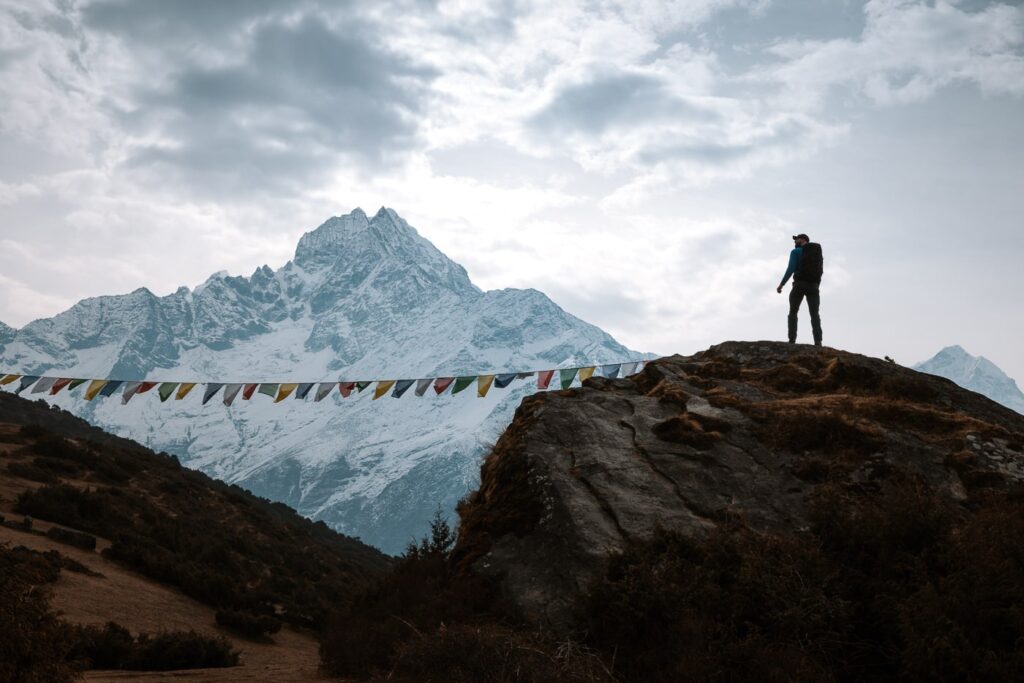
Above Namche the routes split at Mong La, and the crowds thin out fast. Sleep at Dole (4,200 m), then Machhermo (4,470 m), two short days that do your acclimatization quietly for you.
Day 6 is the payoff: three to four hours past the first and second lakes to Gokyo (4,790 m), sitting right on the third lake, Dudh Pokhari. I stayed at the Namaste Lodge for 200 NPR a night and ate well at the village bakeries.
Day 7: Gokyo Ri and the Upper Lakes
Give the morning to Gokyo Ri (5,357 m), about three hours up and two down on an obvious zigzag trail. From the summit you get the lakes, the Ngozumpa Glacier, and Everest, Lhotse, Makalu, and Cho Oyu in one panorama. I hiked it in the afternoon instead and had the top nearly to myself.
If your legs allow, the walk out to the fourth and fifth lakes fills the rest of the day. Otherwise, rest. Tomorrow starts the pass.


Day 8: Gokyo to Dragnag, Crossing the Ngozumpa Glacier
A short one: three hours over the Ngozumpa Glacier to Dragnag (4,700 m). Follow the stone cairns across the rubble and keep moving under the ice cliffs. When I crossed, rocks were breaking off above the trail, and at one point we had to run a short section to avoid them.
Use the afternoon to ask the Dragnag lodge owners about conditions on Cho La, and find other trekkers heading over the next morning. Crossing with company is the smart play.
Day 9: Cho La Pass to Dzongla
The big day. Start by 6 am, climb the steep, loose western side, and you’ll top out on Cho La (5,420 m) in three to four hours. The prayer flags up top frame Ama Dablam perfectly behind you.
The descent crosses the edge of the Cho La Glacier and a short icy rock wall before easing off toward Dzongla (4,830 m). The couple I crossed with had microspikes and moved far quicker on the ice; I managed without, but I’d pack a pair. Six to seven hours total.


Days 10-11: Lobuche, Gorak Shep, and Everest Base Camp
An easy three hours brings you to Lobuche (4,940 m), where the routes rejoin. The Above The Clouds Lodge claims the highest bakery in the world, and the cappuccinos back it up.
Day 11: three hours to Gorak Shep (5,160 m), drop your pack, and walk the rocky trail along the Khumbu Glacier to Everest Base Camp (5,364 m / 17,598 ft). In spring the glacier is covered in expedition tents; in autumn it’s just you and the ice. You won’t see Everest’s summit from Base Camp itself, which is exactly why tomorrow morning exists.


Days 12-14: Kala Patthar Sunrise and the Descent to Lukla
Climb Kala Patthar (5,644 m / 18,517 ft) in the dark, about two hours, and watch first light hit Everest. Then it’s all downhill: Pheriche (4,371 m) that afternoon, Namche on day 13, and the final six hours to Lukla on day 14.
If you’ve got a spare day on the descent, the detour to Ama Dablam Base Camp from Pangboche is an easy add and one of the better picnic spots in the Khumbu.

Crossing Cho La Pass: What It’s Actually Like & My Experience
Many people claim that Cho La sits right on the line between trekking and mountaineering, but I’d say it definitely sits mor on the trekking side. There’s no rope work and nothing technical in good conditions. If you’re acclimatized, reasonably fit, and start early, it’s a hard day rather than a dangerous one.
The crossing breaks into three stages. From the Dragnag side you climb a steep gully of loose rock, the kind where every third step slides back. Then comes the surprise on top: a flat glacier plateau you walk straight across, usually snow-covered, with the crevasses small and easy to read. The final stage descends over the glacier’s edge and a short wall of icy black rock toward Dzongla.
The ice is the real hazard, and it’s why I keep mentioning microspikes. A pair costs around US$20 in Kathmandu and you can pick them up in any store in Thamel easily. The snow can work in your favor though. A dump came through before my crossing, and the fresh boot prints made the route over the top impossible to lose.
Weather sets the schedule. Wind and cloud build most afternoons, so you want to be over the pass by late morning, and the lodge owners on both sides know the current conditions better than any forecast. In winter, heavy snow can shut Cho La for days at a time.
If it does close, you’re detoured rather than stuck. Drop down the valley to Phortse, traverse to Pangboche, and rejoin the main trail toward Lobuche. It adds around two days and skips nothing except the actual pass itself.
That’s a wrap for my guide to the Gokyo Lakes and EBC trek.
In my opinion this is a really good alternative to the overdone traditional EBC route without going the whole Three Pass loop. With around three extra days and one icy pass, you can walk out of the Khumbu having seen the lakes, the view from Gokyo Ri, and Everest Base Camp in a single loop – what an epic trip!
Leaving with one note though – take the acclimatization days seriously, pack the microspikes, and let the lodge owners at Dragnag call the conditions on Cho La. The rest is just walking really!
If you want the bigger version of this loop, my Everest Three Passes guide covers it. If you are short on time read my guide to the classic 12-day EBC itinerary instead, or check out other less visited regions like Manaslu.