The Iran Strait of Hormuz showdown poses risks to oil transport in the Gulf region and could pose a risk to tourism and travel. The Iran Strait of Hormuz standoff has now reached a dangerous new level as Iran escalates its attempts to disrupt US-sponsored oil transportation from Gulf through the Strait of Hormuz. It poses dangers not only to tourism but also to travel and maritime security. The tension between Iran, United States and the United Arab Emirates (UAE) is a cause for concern to one of the most significant energy routes in the world. With the attacks to oil tankers, increasing shipping cost and navigational difficulties of commercial ships in the Gulf region, this problem has gone beyond the oil industry.
Iran’s warnings against the US-UAE oil transportation arrangement have added another layer of tension. Meanwhile, official maritime records reveal significant vessel damage, seafarer casualties and disruptions to international shipping. Although widespread tourism losses directly linked to the latest tanker incidents have not been established, the escalating situation poses risks to cruise operations, aviation, tourism businesses and international connectivity.
Advertisement
Advertisement
Iran Challenges US-UAE Oil Routes in Escalating Strait of Hormuz Power Struggle
Iran has intensified its opposition to an oil shuttle arrangement reportedly supported by the United States and operated through Gulf shipping networks. The system helps Gulf countries maintain crude exports despite security restrictions in the Strait of Hormuz.
Iranian security official Mohsen Rezaei accused US Central Command and the UAE military of coordinating movements involving smaller oil carriers and large crude tankers.
Advertisement
Advertisement
Rezaei claimed Iranian forces had targeted five or six vessels connected to the arrangement nightly over several weeks. However, these figures remain Iranian assertions without independent confirmation.
Tehran considers the shipping system an effort to bypass its pressure on maritime trade. The confrontation has strengthened Iran’s focus on commercial shipping as a means of influencing regional negotiations.
Advertisement
Advertisement
Strategic Strait of Hormuz Becomes the Centre of a Global Energy Confrontation
The crisis intensified after US and Israeli military strikes against Iran began on 28 February 2026.
Iran subsequently increased pressure on shipping through the Strait of Hormuz, while the United States maintained a naval blockade of Iranian southern ports and tightened economic sanctions.
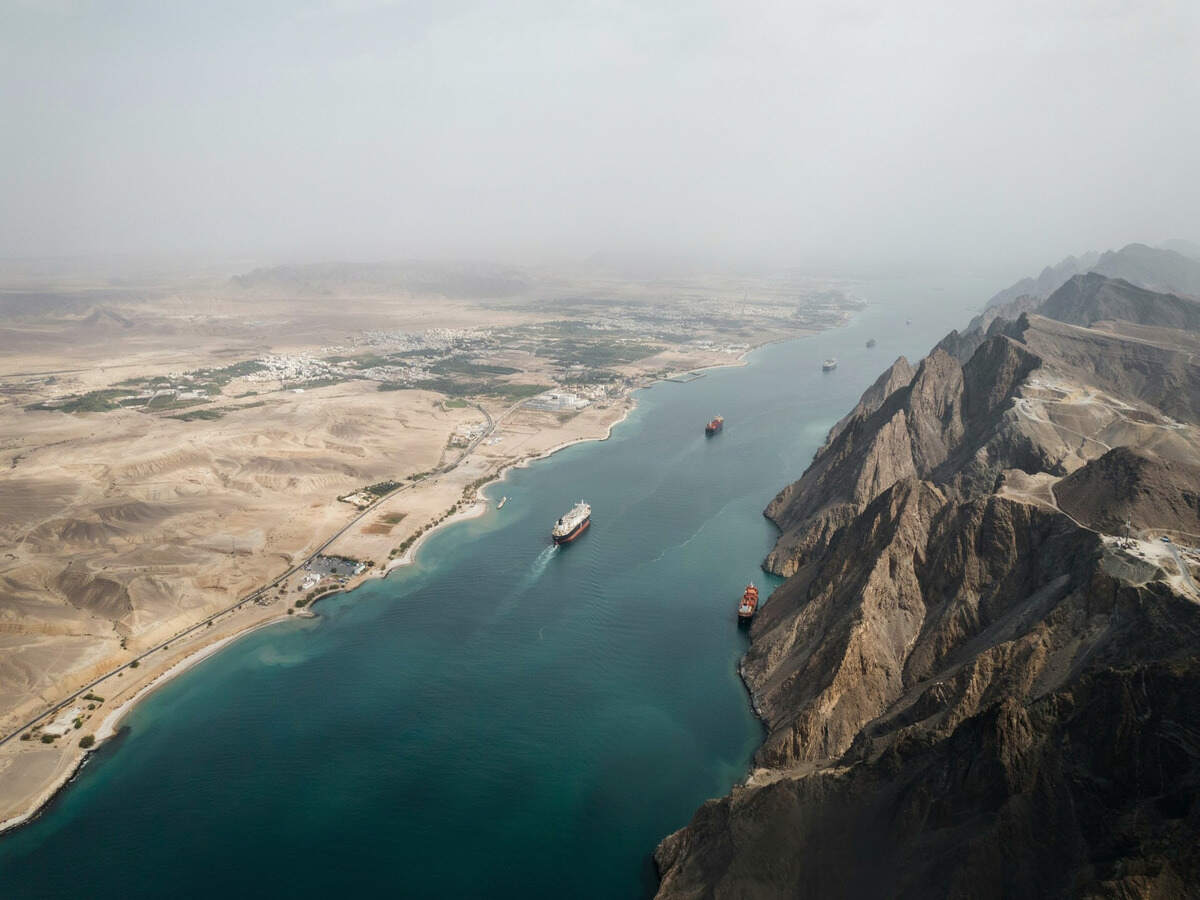
Before the conflict, approximately one-fifth of global oil and gas supplies passed through this strategic waterway.
The confrontation has therefore created challenges for countries that depend on Gulf energy supplies.
US-assisted maritime arrangements have sought to maintain exports, while Iran has threatened further disruption unless its demands are addressed.
The competing strategies have turned the strait into a major point of international economic and security tension.
Advertisement
Advertisement
Secretive Night-Time Oil Transfers Keep Gulf Exports Moving Despite Maritime Threats
The reported oil shuttle arrangement uses smaller vessels and large tankers to move crude through dangerous waters.
Smaller ships collect oil from Gulf ports before navigating southern maritime routes closer to Oman. Some movements take place at night, while certain vessels reportedly switch off tracking equipment.
Oil is then transferred to larger carriers, including very large crude carriers, in the Gulf of Oman.
The smaller ships can subsequently return to Gulf ports to collect additional cargo.
The US Energy Information Administration (EIA) has independently confirmed that ship-to-ship transfers were taking place along Oman’s coastline.
However, the precise military management of the alleged US-UAE shuttle system has not been independently established.
Advertisement
Advertisement
Maritime Emergency Deepens as 113 Incidents Reveal Mounting Danger for Commercial Shipping
The International Maritime Organization (IMO) recorded 113 confirmed maritime incidents across the Middle East by 14 October 2026.
An earlier IMO update documented 100 incidents and 24 seafarer fatalities as of 9 October.
These numbers demonstrate the seriousness of the wider maritime emergency, although they should not all be attributed directly to Iran.
Several ships suffered damage in and around the Strait of Hormuz during October.
The IMO’s records include the sinking of GFS PRIDE on 13 October and injuries aboard other vessels.
Such incidents threaten commercial shipping and increase uncertainty for ports, maritime workers and businesses relying on predictable international trade.
Advertisement
Advertisement
October Tanker Attacks Expose Growing Risks Near Oman, UAE and Saudi Arabia
Official maritime reports identified multiple incidents between 9 and 16 October 2026.
| Date | Vessel or location | Reported development |
|---|---|---|
| 9 October | GEM NO. 2, near UAE | Vessel damaged |
| 10 October | VALTHERA, Oman waters | Vessel damaged |
| 11 October | DP WORLD KAVERI | Vessel damaged; one person injured |
| 11 October | EVER VICT | Vessel damaged; two people injured |
| 11 October | PETRO DOLPHIN, Sohar | Two seafarers reported missing |
| 13 October | GFS PRIDE | Vessel sank |
| 13 October | GFS GISELLE, near Oman | Vessel damaged |
| 16 October | Tanker northeast of Al Jubayl | Reported rocket-propelled grenade attack |
| 16 October | Another tanker northeast of Al Jubayl | Struck by an unidentified projectile |
UK Maritime Trade Operations reported the two tanker incidents near Saudi Arabia on 16 October.
These developments demonstrate that maritime security concerns extend beyond the main Hormuz passage.
Iran Raises Stakes With Warnings Against UAE Technology and Energy Infrastructure
Iran’s warnings are not limited to oil tankers.
Mohsen Rezaei also threatened US-linked technology facilities and infrastructure in the UAE and surrounding region.
His warnings referenced data centres, artificial intelligence facilities, communications infrastructure and energy assets.
Advertisement
Advertisement
Iran indicated that attacks against its own energy and civilian facilities could provoke additional retaliation.
These statements raise concerns about a possible expansion of the conflict into digital and industrial infrastructure.
However, threats must be distinguished from confirmed military operations.
The available information does not establish that the technology facilities identified in the warnings were subsequently attacked.
For regional businesses, the possibility of escalation adds to existing operational uncertainty.
Oil Prices Surge as Hormuz Shipping Disruption Reshapes Global Energy Markets
The economic impact is already substantial.
Advertisement
Advertisement
EIA figures indicate that oil flows through the Strait of Hormuz declined from 21.6 million barrels per day in the fourth quarter of 2025 to 4.9 million barrels per day in the second quarter of 2026.
This represents a fall of approximately 77%.
Brent crude averaged $114 per barrel in September 2026 and reached $131 on 15 September.
Freight expenses for Gulf crude reportedly increased from approximately 1–3% of oil costs before the conflict to 25–30% during the disruption.
Some crude sellers have offered discounts reaching $35 per barrel.
Higher fuel costs can eventually affect aviation, logistics and tourism transport, although specific tourism price increases have not been confirmed.
Advertisement
Advertisement
Saudi Arabia, Kuwait, Bahrain and UAE Confront Uneven Energy Disruptions
Gulf producers have experienced different levels of disruption.
The EIA estimated approximately 4.77 million barrels per day of regional oil production was shut in during September 2026.
| Country | Estimated September oil production shut-in |
|---|---|
| Saudi Arabia | 1.70 million barrels/day |
| Iran | 1.20 million barrels/day |
| Kuwait | 930,000 barrels/day |
| Iraq | 760,000 barrels/day |
| Qatar | 100,000 barrels/day |
| Bahrain | 80,000 barrels/day |
| UAE | 0 barrels/day |
The UAE maintained production despite regional shipping difficulties.
Saudi Arabia relied partly on its East-West pipeline to transport oil towards the Red Sea. However, attacks disrupted pipeline operations in September before partial flows resumed on 22 September.
This illustrates why alternative transportation routes are increasingly important.
Gulf Tourism and Global Travel Face Uncertainty as Regional Security Concerns Grow
The maritime confrontation has implications for the Middle East’s expanding tourism economy.
Advertisement
Advertisement
The UAE, Oman and Saudi Arabia have invested heavily in international connectivity, hospitality and tourism infrastructure.
Security uncertainty could influence travel decisions, particularly where tourists encounter warnings about regional tensions.
The UK’s official UAE travel guidance has highlighted the possibility of flight disruption and temporary airspace closures amid regional instability.
However, there is no confirmed evidence in the information reviewed that the latest oil shuttle threats have directly caused widespread hotel closures, major tourism revenue losses or a complete shutdown of Gulf tourism.
The most immediate tourism concerns involve transport reliability, perceived safety and the possibility of rising operating costs.
Cruise Tourism, Airlines and Hospitality Businesses Face Different Risks
Regional tourism operators may encounter several challenges if maritime attacks continue.
Advertisement
Advertisement
- Cruise tourism: Security concerns around Gulf ports could influence itinerary planning and cruise vessel movements.
- International aviation: Regional tensions could increase the possibility of flight diversions, cancellations and airspace restrictions.
- Hotels and resorts: Uncertainty may affect traveller confidence even in destinations where tourism facilities remain operational.
- Tourism transport: Higher fuel prices could increase costs for airlines, tour operators and transport providers.
- Travel insurance: Visitors may need to examine policy exclusions relating to conflict and regional disruption.
These are potential consequences rather than confirmed industry-wide losses.
The distinction matters because the region’s tourism industry includes many destinations and services operating under different security conditions.
Oman Emerges as a Critical Maritime Corridor While Shipping Traffic Collapses
Oman’s coastline has gained importance as Gulf exporters seek routes away from the most dangerous areas.
The southern shipping corridor facilitates tanker movements and offshore crude transfers.
Nevertheless, attacks near Sohar and elsewhere off Oman indicate that these alternative arrangements are not free from danger.
Shipping intelligence cited in the original report indicated daily vessel transits through Hormuz had fallen from approximately 138 before the conflict to 31 in late September.
Advertisement
Advertisement
The same reporting identified 45 targeted vessels in the third quarter, with tankers representing 87% of those targets.
For Oman, secure maritime access matters to its ports, trade connections and wider economic activity, including tourism.
Thousands of Seafarers Caught in Crisis as International Maritime Authorities Demand Action
The human consequences extend far beyond damaged tankers.
In August, the IMO reported that up to 400 vessels carrying approximately 6,000 seafarers had been unable to leave the Persian Gulf safely.
At that stage, at least 70 attacks on international shipping and 19 seafarer fatalities had been verified.
The organisation has repeatedly emphasised the importance of safe navigation and the right of transit passage through international straits.
Advertisement
Advertisement
Its October incident records underline the continuing dangers facing crews.
These conditions affect maritime labour, cargo movement and the confidence of international shipping operators.
They also demonstrate why restoring maritime safety remains vital for regional economies.
Diplomatic Deadlock Leaves Oil Trade, Middle East Tourism and Global Connectivity Facing an Uncertain Future
Iran has linked the reopening of the Strait of Hormuz to a wider set of seven conditions in its negotiations with Washington.
Tehran claims some demands have received acceptance, but independent confirmation of those claims remains unavailable.
The United States continues to apply economic and maritime pressure, while Iran maintains leverage through threats to shipping.
Advertisement
Advertisement
The EIA forecast Brent crude averaging $105 per barrel during the final quarter of 2026, although this projection preceded the latest October attacks.
With maritime incidents continuing, the future remains uncertain.
For the Middle East tourism industry, the central concern is whether regional instability will spread from energy shipping into wider transport networks.
The fight for control of the Strait of Hormuz by Iran creates concern in terms of the danger for US-UAE oil transportation and the safety of tourism in the region and around the world.
The fight for control of the Strait of Hormuz is thus more than just an oil dispute. It is a threat to maritime safety and international connectivity.