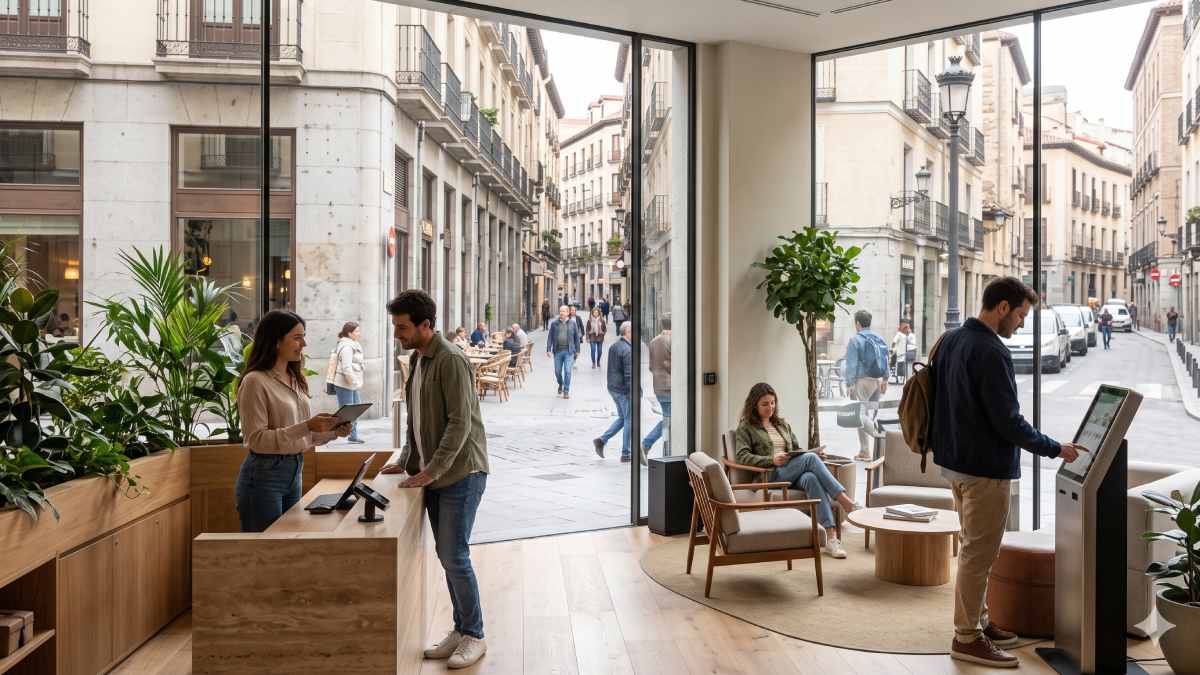
There has been an observation of a quiet revolution taking place in the great cities of Europe, whereby the primary dilemma in the European tourism industry has been brought to light. In previous years, the practice of intrusive digital surveillance and stringent automated scheduling was championed by the large global travel companies, who believed that efficient digital interaction was the only priority of tourists. This has since been proven to be flawed. In today’s society, there has been a revolt against the algorithmic control of travellers and boutique hotels in such cities as Madrid, Milan, Paris, Lucerne, Amsterdam, and London. No more are tourists willing to put up with robotic interactions and corporate surveillance; instead, they demand their sovereign autonomy.
The Agency Dilemma in European Tourism: Background and Catalysts
From Operational Efficiency to Algorithmic Overreach in Rome, Paris, Barcelona, Madrid, and Berlin
A critical operational crossroads has been reached by the metropolitan travel sector across the European continent. Following years of volatile demand patterns, unprecedented operational densities have been attained by tourist accommodations across the European Union. It was demonstrated through harmonised statistical reporting published by Eurostat that massive visitor inflows were absorbed by regional capitals and coastal economic hubs, including Rome, Paris, Barcelona, Madrid, and Berlin. This volume was further expanded across short-stay rental platforms across urban centres such as Málaga, Rome, Paris, and Madrid.
Advertisement
Advertisement
To manage these historic visitor volumes against systemic labour deficits, hotel management groups initially turned toward heavy digital automation. Self-service check-in kiosks, ambient video analytics, automated yield management engines, and artificial intelligence day-planners were installed. However, an unexpected consumer backlash was precipitated by this uncalibrated deployment. Rather than empowerment being experienced, international travellers found themselves subjected to digital friction: robotic terminal interfaces encountered in empty lobbies, opaque dynamic price increases faced during checkout, and algorithmically generated itineraries by which millions of visitors were herded into identical, congested urban corridors.
The operational lesson is regarded as unequivocal: when artificial intelligence and automated systems are evaluated by travellers, the dividing line is identified not as technological literacy, but as agency versus friction. Technology is not resisted by modern travellers because of its complexity; resistance is triggered when personal discretion is removed, private data is compromised, and empathetic human service is replaced by administrative digital self-service.
Defining Mechanical Automation and Human Primacy Across Madrid, Milan, and Paris
In response to this consumer resistance, an alternative operating philosophy has been embraced across Europe: mechanical automation, human primacy. Pioneered by independent boutique hoteliers and forward-thinking municipal tourism boards across hubs such as Madrid, Milan, and Paris, it is established by this framework that digital automation must be receded into the architectural and computational background.
Instead of guest-facing robots or forced self-service applications being deployed to shift administrative labor onto the customer, repetitive, high-friction operational tasks are assigned to mechanical automation:
Advertisement
Advertisement
- Property management records are synchronised across encrypted databases.
- Statutory police identity documentation is submitted to government portals in real time.
- Distributed rate inventories across direct and third-party channels are monitored.
- Environmental sensor data is parsed to optimize room climate and energy consumption.
Simultaneously, it is ensured through human primacy that every point of guest contact is grounded in emotional intelligence, cultural insight, and personalized hospitality. When data entry is absorbed by back-of-house algorithms, front-of-house staff are emancipated from desktop monitors. Physical counters can be dismantled by hoteliers, teams can be transitioned into roaming cultural concierges, and authentic guest rapport can be established.
The efficiency demands of hotel operators are reconciled with the agency demands of modern travellers through this synthesis. An operating model structured across four foundational pillars is established: regulatory zero-party data compacts, deskless foyers, serendipity architectures, and reverse yield transparency.
Advertisement
Advertisement
The Regulatory Frontier: Zero-Party Data Compacts and Algorithmic Governance
The EU AI Act Article 50 Transparency Mandate Across European Capitals
The handling of guest data across the European hospitality sector has been reshaped by stringent legislative action. The primary driver of this transformation is Regulation (EU) 2024/1689, universally known as the EU AI Act. Direct statutory mandates regarding artificial intelligence transparency were established as the regulation entered into force across the European Union, with Article 50 becoming fully enforceable on 2 August 2026.
Strict compliance duties were introduced under Article 50 for both providers and commercial deployers of AI systems operating within the internal market. Under Article 50(1), it must be ensured by providers that any artificial intelligence system designed to interact directly with natural persons—including automated guest messaging platforms, AI concierges, and conversational booking bots—clearly and distinguishably informs users that an AI system is being interacted with at the latest during their first exposure.
Under Article 50(2), robust, interoperable, and machine-readable markers (such as cryptographic C2PA metadata) must be carried by synthetic text, audio, and visual outputs to ensure automated detectability. Under Article 50(3), exposed individuals must be explicitly notified by deployers of emotion recognition software or biometric categorisation tools.
Legacy hospitality tracking systems are rendered untenable by these statutory requirements. For years, opaque software packages were sold to hotels by digital marketing vendors to scrape guest social media footprints, cookies, and browsing behaviors so that preferences could be inferred. Under the combined enforcement of Article 50 of the AI Act and the GDPR, direct corporate liability is incurred if predictive, black-box behavioral profiling is deployed without explicit, informed consent.
Advertisement
Advertisement
AEPD Regulatory Precedents and the Amadeus Sanction in Madrid
The enforcement landscape regarding travel profiling was defined by regulatory intervention in Spain. A landmark ruling was issued against global travel technology provider Amadeus by the Spanish Data Protection Agency (Agencia Española de Protección de Datos—AEPD), whereby administrative fines were levied for unlawful passenger and traveller profiling.
It was established by the AEPD’s formal audit that massive volumes of personal travel records harvested across airline reservations, global distribution systems, and hotel booking channels had been processed and enriched by Amadeus. It was determined by the supervisory authority that travellers were never informed that personal booking data would be fed into predictive behavioral models or reused across commercial travel ecosystems. It was ruled by the AEPD that fundamental rights under GDPR Article 6 and Article 22 were violated when aggregated traveler data was utilized for algorithmic profiling without an unambiguous, verifiable legal basis.
Data governance across Iberian hospitality was altered by this precedent. It was realized by hoteliers in Madrid, Barcelona, and Seville that direct regulatory penalties from the AEPD were risked through commercial reliance on opaque, third-party data enrichment tools. The practice of silently harvesting guest digital trails was deemed legally reckless, prompting a decisive industry pivot toward explicit, sovereign data collection models.
Sovereign Guest Vaults: Madrid and Barcelona Field Cases
Confronting this regulatory reality, the Zero-Party Data Compact was developed by independent boutique chains in Madrid (along the Gran Vía corridor and the Salamanca luxury quarter) and Barcelona (within the Eixample and Gothic districts). Radical transparency regarding the utilisation of personal details was reported to be demanded by a substantial majority of surveyed travellers in urban Spain, while acute distrust was voiced regarding third-party cookie syndication and ambient digital tracking.
To restore trust, invasive ad-tech trackers were dismantled from digital ecosystems by these operators. Instead, sovereign “Guest Preference Vaults” were introduced, which are accessed through encrypted, mobile-friendly micro-surveys delivered following direct reservation confirmation. Termed “Declare Your Stay,” guests are empowered by these opt-in workflows to voluntarily declare their precise on-property preferences:
- Exact ambient room temperature calibrated prior to arrival.
- Specific pillow composition and bedding density (such as natural down, firm memory foam, or organic buckwheat).
- Granular dietary parameters and intolerances (such as celiac-safe kitchen protocols or oat milk preferences).
- Environmental acoustic preferences (such as high-floor quiet zones away from service elevator shafts).
Critically, complete user sovereignty is guaranteed by this data architecture. An explicit opt-out toggle is featured in the guest vault, ensuring that personal declarations will never be commodified, shared with ad-tech aggregators, or subjected to predictive cross-site tracking. The data remains locked to the single guest folio within the hotel’s Property Management Systems (PMS) and is programmed to be purged automatically post-stay unless persistent storage for future visits is explicitly requested by the guest.
Advertisement
Advertisement
The approach was validated by commercial results. Higher direct re-booking retention over twelve months was achieved by properties deploying sovereign zero-party vaults compared to properties utilizing third-party behavioral trackers. Furthermore, guest satisfaction sentiment was elevated and arrival-day room reassignment requests were markedly curtailed, proving that explicit guest declaration consistently outperforms speculative algorithmic prediction.
Lobby Transformation: The Italian Blueprint for Deskless Foyers
Dismantling Reception Counters in Milan and Rome
While the regulatory frontier of data governance was addressed by Spain’s hospitality sector, an architectural revolution was initiated by Italy’s urban destinations: the eradication of the physical front desk. For over a century, the hotel lobby was anchored by an imposing reception counter. A physical divide was formed by this barrier, separating weary travellers from hotel personnel who remained buried behind computer monitors.
This traditional configuration collapsed under post-pandemic labor realities. Severe operational strain caused by acute frontline staff shortages (carenza di personale) was reported by the majority of Italian hoteliers in official industry surveys published by Federalberghi. Severe bottlenecks were faced by front-of-house teams during high-demand compression windows, such as Milan Design Week (Salone del Mobile) or major cultural events across Rome. Check-in lines were frequently extended into the street while minutes were spent by receptionists manually inputting passport details, verifying credit card pre-authorisations, and encoding plastic keycards.
When it was recognised that the recruitment of additional administrative staff was economically and demographically constrained, the traditional front counter was eliminated entirely by boutique operators in Milan’s Brera and Navigli design quarters, as well as Rome’s Prati and Trastevere districts. Administrative barriers were replaced with open-concept residential foyers appointed with comfortable lounge furniture, curated artwork, and communal espresso bars.
Operational Reallocation and Screen Elimination in Milan and Rome
The shift to deskless foyers was enabled by the migration of core property management functions to cloud-native mobile architectures. Front-of-house staff were unburdened from fixed desktop screens. Equipped with slim mobile tablets or smart communication badges, guests are greeted at the doorway by roaming hosts, addressed by name, and invited to relax with an Italian espresso or glass of Franciacorta.
A fundamental reallocation of staff labor was documented in evaluations of deskless conversions in Milan and Rome. By the automation of the mechanical aspects of check-in—pre-authorising payments via encrypted merchant APIs, issuing mobile Near Field Communication (NFC) digital room keys, and synchronising folios in the cloud—the operational dynamic is inverted. Working hours are no longer dominated by administrative screen engagement; instead, the vast majority of staff time is dedicated to engaging guests, offering contextual advice on local artisan ateliers, culinary reservations, and neighbourhood cultural events. Arrival waiting durations and lobby congestion are minimized, and post-stay host review sentiment is significantly enhanced.
Advertisement
Advertisement
Reconciling the De Visu Mandate with Frictionless Arrivals in Rome, Florence, and Venice
A major legal test regarding public security regulations was faced during the modernization of Italian reception operations. A binding judgment was delivered on 21 November 2025 by the Italian Council of State (Consiglio di Stato), halting fully unstaffed, remote digital check-in operations across the country.
The legal dispute was centred on circulars issued by the Ministry of the Interior enforcing Article 109 of the Consolidated Law on Public Security (Testo Unico delle Leggi di Pubblica Sicurezza—T.U.L.P.S.). On-site staff had been eliminated entirely by certain hospitality operators, particularly within the short-term rental sector, with guests required to upload identity documents to third-party web portals and entry codes being collected via external, unmonitored key-boxes affixed to street doors.
It was ruled by the Consiglio di Stato that a strict, non-negotiable legal obligation is established under Article 109 of the T.U.L.P.S.: the identification of arriving guests must be executed via direct, visual, in-person verification—known in Italian jurisprudence as the de visu requirement. It was clarified by the supreme administrative court that public safety statutes are violated by remote, unmonitored document transmissions paired with automated key-boxes because verification cannot be established that the premises are entered by the individual matching the identity document presented.
Significant repercussions followed this ruling:
- Severe operational disruptions and regulatory citations were faced by fully automated, unstaffed vacation rental operators across Rome, Florence, and Venice.
- Deskless foyer models were leveraged by full-service boutique hotels to showcase the gold standard of compliant hospitality.
- Rather than cold administrative desks being maintained, arriving guests are joined in lounge seating by boutique hosts, a brief and courteous de visu identity check is conducted using an encrypted mobile camera scanner, and verified guest data is instantly transmitted to the State Police (Polizia di Stato – Portale Alloggiati) database.
It was demonstrated by this legal reconciliation that physical human presence is not an operational obstacle to innovation; rather, high-touch service is reinforced while strict statutory compliance is maintained.
Workforce Evolution and Union Integration with Federalberghi in Milan and Rome
Workforce displacement is often cited as a primary concern surrounding hotel automation. In Italy, where labor protections are fiercely defended by trade unions and industry groups, careful tripartite alignment involving Federalberghi was required during the transition to deskless foyers.
Advertisement
Advertisement
It was maintained by Federalberghi that technological adoption should not be utilized as a pretext for workforce reduction. Structured upskilling initiatives were supported by the federation, through which unionized front-desk clerks were repositioned as certified cultural advisors and hospitality hosts. Rather than front-desk personnel being terminated, specialized training programmes were funded by boutique properties in Milan and Rome, elevating staff proficiencies in regional art history, local gastronomic heritage, and multilingual concierge services.
The paradox of Italian hospitality was resolved through this strategy: by the elimination of low-value mechanical data entry, frontline staff were elevated into skilled cultural ambassadors. Union resistance subsided as staff retention was strengthened, workplace burnout was reduced, and greater professional fulfillment was reported by employees when engaging with guests rather than troubleshooting desktop terminal errors.
Serendipity Architecture: Anti-Itineraries and Overtourism Defense
The Flaws of Algorithmic Day-Planning and Tourist Clustering in Paris and Lucerne
As generative AI models and consumer chatbots surged into the travel planning mainstream, it was predicted by tourism analysts that city exploration would be dominated by algorithmic itineraries. Users were encouraged by travel platforms to generate complete, multi-day, hour-by-hour itineraries using algorithmic engines. However, major technical inaccuracies and urban vulnerabilities were revealed during practical implementation.
High factual error and hallucination rates were documented by computational research benchmarks evaluating large language models across European city itineraries. Visits to museums were regularly scheduled on closed days, non-existent transit connections were fabricated, invalid ticketing links were supplied, and walking times between historical sites were miscalculated.
Beyond informational inaccuracies, severe geographic clustering was generated by algorithmic planning. Because historical web data is utilized to train language models, recommendations are naturally converged around the most indexed landmarks. In Paris, millions of independent tourists were funneled along identical streets: the Île de la Cité, the Louvre plaza, and the narrow lanes of Montmartre. In Lucerne, visitors were repeatedly directed into an identical route around the historic Chapel Bridge (Kapellbrücke) and the Lion Monument (Löwendenkmal).
Urban congestion, resident frustration, and degraded tourist experiences were precipitated as a result. Acceptance of rigid, automated hour-by-hour day planners declined substantially among surveyed travellers, and minimal confidence was expressed in allowing AI tools to manage actual booking execution. Vacations were reported to feel like corporate project plans when rigid, algorithmically generated schedules were followed, whereby the spontaneous discovery that defines memorable travel was removed.
Advertisement
Advertisement
Paris: Metropolitan Dispersion and ExploreParis Micro-Anchors
To combat algorithmic overtourism and protect visitor autonomy, an ambitious metropolitan dispersion initiative was launched by the Métropole du Grand Paris, in close collaboration with the national tourism agency Atout France and the regional tourism board Paris je t’aime.
Visitor flows are actively decentralized away from saturated central tourist corridors toward the broader metropolitan territory through the ExploreParis public platform, supported by regional tourism roadmaps. It was recognized by Parisian boutique hotel consortia that serendipity architecture should be provided instead of attempting to plan every hour of a guest’s day—lightweight, non-prescriptive digital frameworks by which real-time context is supplied while exploration remains unscripted.
Curated “micro-anchors” are provided to guests under this model. Rather than an unbroken full-day schedule being presented, a single cultural, architectural, or culinary point of interest situated in an under-visited neighborhood is suggested—such as the working artisan studios of Pantin, the architectural heritage of Belleville, or open-air canal walks along the Canal de l’Ourcq. Live public transit feeds from RATP, real-time foot-traffic indicators, and weather-contingency options are embedded within the modular assistant, leaving the remainder of the day open for spontaneous discovery.
It was confirmed by spatial tracking data gathered by regional tourism observatories that time and expenditure were significantly more likely to be directed toward outer arrondissements and inner-suburban creative districts by visitors utilizing modular micro-anchors, by which congestion around central monuments was alleviated and local businesses were supported.
Lucerne: Real-Time Flow Management and Vision Tourism 2030
A parallel breakthrough in serendipity design was unfolded in Lucerne, Switzerland. Nestled on the shores of Lake Lucerne, approximately eighty-six thousand residents are accommodated by the historic city, yet millions of international and day visitors are absorbed annually. Acute resident friction and heritage preservation concerns were caused by the intense concentration of visitors around the medieval Chapel Bridge and the Musegg Wall.
In response, an integrated visitor-flow management system was deployed by the Lucerne Tourism Board (Luzern Tourismus), operating under the municipal “Vision Tourism Lucerne 2030” framework in partnership with the Lucerne University of Applied Sciences and Arts. A real-time visitor density monitoring system was established by municipal planners through discreet optical and people-flow sensors installed across sensitive urban chokeholds.
Advertisement
Advertisement
Rather than restrictive quotas or rigid digital schedules being imposed through this data, the metrics were integrated into a modular, non-prescriptive digital travel assistant deployed across local boutique hotels. When heavy congestion is detected at the Chapel Bridge, contextual suggestions are quietly adjusted by the digital assistant. Crowded areas are bypassed, and alternative experiences are highlighted:
- Clear weather alerts linked to open-air electric ferry excursions across Lake Lucerne toward Mount Rigi.
- Self-guided artisan walking routes exploring the quieter, upper battlements of the Musegg Wall during low-density windows.
- Live timetables for open-air markets and regional cultural exhibitions in neighboring cantonal districts.
Higher trip satisfaction was reported in exit surveys by travellers utilizing modular serendipity systems compared to those following rigid AI itineraries. Urban preservation was balanced with genuine personal freedom in Lucerne by providing accurate live data while traveller autonomy was fully respected.
Commercial Economics: Algorithmic Parity and Reverse Yield Management
The Demolition of Rate Parity Under the Digital Markets Act Across Brussels and European Hubs
The economic foundation of European hotel distribution underwent a historic transformation following the implementation of Regulation (EU) 2022/1925, known as the Digital Markets Act (DMA). For more than a decade, contractual “rate parity” clauses were utilized by dominant Online Travel Agencies (OTAs) to protect their market position. Lower room rates, more generous breakfast inclusions, or more flexible cancellation terms were prohibited from being offered by hoteliers on direct websites compared to listings on intermediary platforms.
Booking Holdings Inc. (Booking.com) was formally designated as a gatekeeper under the DMA by the European Commission, and its core booking platform was classified as a Core Platform Service subject to mandatory contestability rules. Under Article 5(3) of the DMA, gatekeepers are strictly prohibited from preventing business users from offering the same or better prices and commercial conditions on their own websites or across third-party sales channels.
All parity clauses across the European Economic Area were subsequently removed by Booking.com from its General Delivery Terms following regulatory dialogue with the European Commission. Parity compliance was eliminated as an eligibility metric for preferred visibility and partner tiers, allowing direct-channel bookings to be discounted by European hoteliers without fear of algorithmic delisting or visibility demotion. Concurrently, these protections were reinforced by national competition watchdogs—including the Netherlands Authority for Consumers and Markets (ACM) in Amsterdam and the German Federal Cartel Office in Bonn—ensuring that the statutory parity ban could not be bypassed through indirect technical mechanisms.
UK DMCCA Enforcement: CMA Crackdowns on Drip Pricing and Fake Urgency in London
Across the Channel, the regulatory framework governing digital pricing architectures was reinforced by the UK Competition and Markets Authority (CMA) following the enactment of the Digital Markets, Competition and Consumers Act (DMCCA). Major enforcement programmes were initiated by the CMA targeting deceptive online choice architecture and hidden algorithmic surcharges across consumer booking portals.
Advertisement
Advertisement
Strict, enforceable boundaries for digital hotel marketing were established by statutory directives published by the CMA:
- Total Ban on Drip Pricing: Presentation of the full, unavoidable transactional price—including all mandatory administrative fees, destination surcharges, cleaning fees, and local taxes—is mandated at the very first headline price impression. Adding mandatory fees late in the checkout journey is strictly prohibited as an unlawful commercial practice.
- Elimination of Deceptive Scarcity and Urgency Cues: Substantial administrative fines are applied against algorithmic pressure-selling mechanisms, such as simulated countdown timers, arbitrary expiration alerts, and deceptive low-inventory claims, unless verified by real-time inventory records.
- Scrutiny of Dynamic Pricing Surges: Transparent pricing policies are required by the CMA for businesses utilizing dynamic or algorithmic variable pricing, preventing consumer urgency or vulnerable market segments from being exploited by algorithmic systems.
Deceptive online tactics long utilized by intermediary platforms were removed through these regulatory actions by the European Commission and the CMA, providing boutique hotels with a historic opportunity to re-establish direct commercial relationships based on pricing transparency.
Dynamic Price Protection in London and Amsterdam Foyers
Armed with statutory rate autonomy, an innovative pricing framework termed reverse yield management was introduced by independent boutique hoteliers in Central London (concentrated across Shoreditch and Covent Garden) and Amsterdam (situated along the historic Canal Ring).
Traditionally, dynamic hotel pricing functioned as an opaque yield engine designed to maximize short-term revenue per available room. Rates were raised during high-demand windows, but if occupancy flagged near the arrival date, room rates were slashed by algorithms to clear distressed inventory. High-intent, loyal customers who booked weeks in advance were alienated by this model when it was discovered that identical rooms were secured by last-minute walk-ins at a fraction of the cost.
Under the reverse yield framework—termed Dynamic Price Protection—algorithmic pricing is turned into an explicit direct-booking guarantee. When a room is reserved directly through a proprietary engine, public pricing for that specific room category is continuously tracked by an internal software agent up to twenty-four hours prior to check-in.
If a downward rate adjustment is made to clear distress inventory, the Dynamic Price Protection system intervenes automatically:
Advertisement
Advertisement
- The rate reduction delta for the reserved room category is identified by the pricing algorithm.
- The guest’s folio ledger is reconciled in real time by the property management system.
- The monetary difference is credited back to the customer, either via an automatic refund to their payment card or as an on-property food, beverage, and wellness credit.
- An automated notification is received by the guest confirming that the rate drop was detected and the credit was applied to the folio.
Dynamic pricing is transformed from an adversarial extraction tool into a powerful loyalty engine through this approach. Fear of price volatility is eliminated, and direct bookings are encouraged without hours being spent monitoring third-party comparison portals.
Financial Arbitrage: Direct Retention Versus OTA Intermediation in London and Amsterdam
The commercial viability of Dynamic Price Protection is supported by the unit economics of hospitality distribution, as commission fees were historically levied by major OTAs on every gross reservation secured through their platforms.
The financial advantages are clearly demonstrated:
- Commission Arbitrage: Substantial commission fees are extracted from operating margins by intermediary platforms. When public distress rates are lowered to fill last-minute vacancies, crediting that difference back to an early direct booker still yields a higher net operating margin than paying third-party intermediary fees.
- Cancellation Hedge: High cancellation rates are exhibited by travellers booking through OTAs, as multiple refundable options are frequently reserved and cancelled at the last moment. Markedly lower cancellation rates are demonstrated by direct guests protected by price-drop guarantees, stabilizing forward occupancy modeling.
- On-Property Ancillary Spend: Automated price-drop credits are predominantly spent by guests within the hotel’s restaurants, cocktail lounges, and wellness facilities, returning high-margin revenue directly to on-site operations.
Resolving the Agency Dilemma in European Tourism: A Unified Operational Framework
Cross-City Comparative Analysis
It is demonstrated by the transformation unfolding across European anchor cities that technical efficiency and personal touch need not be mutually exclusive. When regulatory compliance, lobby design, modular navigation, and pricing transparency are unified, an integrated operating framework is established: mechanical automation, human primacy.
| European Anchor City | Primary Regulatory Driver | Front-of-House Architectural Model | Data Governance & Sourcing Model | Urban Mobility & Visitor Flow Protocol | Revenue & Channel Distribution Architecture |
| Madrid & Barcelona, Spain | EU AI Act (Art. 50) & AEPD Profiling Sanctions | Open-plan salon foyers; mobile tablet check-in | Sovereign Zero-Party Preference Vaults; zero ad-tech tracking | Neighborhood culinary and artisan trail integrations | Algorithmic direct-rate parity; transparent loyalty pricing |
| Milan & Rome, Italy | Art. 109 T.U.L.P.S. & Consiglio di Stato De Visu Mandate | Fully deskless foyers; barista lounge check-in stations | Mobile camera identity scanning; real-time police portal transmission | Roaming cultural concierges; upskilled union hospitality staff | Direct-booking value bundles with inclusive regional amenities |
| Paris, France | AI Act Transparency & Metropolitan Tourism Roadmap | Hybrid concierge lounges; digital artisan discovery desks | Explicit opt-in profiles; linguistic, dietary, and sensory declarations | ExploreParis modular micro-anchors; outer-arrondissement dispersion | Full upfront price transparency; zero hidden checkout surcharges |
| Lucerne, Switzerland | Vision Tourism 2030 & Canton Urban Flow Directives | Integrated digital systems paired with high-touch personal hosts | Anonymised pedestrian sensor data merged with opt-in guest criteria | Real-time anti-itinerary assistant tied to transit and weather feeds | Transparent fixed regional transport packages bundled with direct stays |
| London & Amsterdam, UK & Netherlands | UK DMCCA Enactments & EU DMA Gatekeeper Restrictions | Communal living room lobbies; mobile keyless NFC room access | Strict first-party consent ledgers; zero third-party syndication | Open transit integration; localized walking loops avoiding chokeholds | Reverse yield management; automated price-drop refunds |
Economic and Policy Outlook for European Hospitality
The conclusion of uncalibrated technological experimentation is signaled by the modernization of European urban hospitality. For more than a decade, digital automation was treated as a tool of extraction: headcounts were cut, interactions were commoditised, and customer data was funneled into opaque corporate silos.
This extractive trajectory has been curtailed by the convergence of European regulatory frameworks—led by the enforcement of Article 50 transparency rules under the EU AI Act, the dismantling of OTA rate parity under the Digital Markets Act, and the judicial enforcement of in-person safety standards.
Advertisement
Advertisement
These statutory obligations are being turned into distinct market advantages by European hoteliers. By allowing backend algorithms to handle mechanical operations—such as property management updates, regulatory data filing, and dynamic rate audits—front-of-house staff are liberated from repetitive administrative burdens.
This operational reality is reflected in the physical transformation of hotel lobbies from sterile transaction counters into vibrant social lounges. Autonomy is restored when a deskless foyer is entered, a warm greeting is received from a human host, and sovereign control over personal data is retained by travellers. Urban congestion is eased and authentic cultural discovery flourishes when city exploration is guided by modular, non-prescriptive serendipity tools rather than rigid algorithmic itineraries. Furthermore, lasting commercial trust is forged when direct reservations are protected by transparent price-drop guarantees.
The lesson emerging across Madrid, Milan, Rome, Paris, Lucerne, Amsterdam, and London remains clear: in an era of accelerating artificial intelligence, authentic hospitality is recognized as an irreplaceable human discipline. Technology is understood to achieve its highest purpose not when the human host is replaced, but when operations are conducted invisibly in the background, safeguarding personal agency, supporting local communities, and elevating the timeless human art of welcoming the world.
Conclusion
The proof of this comes from the technology revolution being seen across metropolitan Europe where genuine luxury lies within the empowerment of the guest as opposed to machine calculations. With record numbers of visitors and tight regulation being experienced in the historic gateway cities, true loyalty can never be built by way of overzealous surveillance and strict scheduling. The solution to the ongoing agency problem in Europe will require an operational philosophy built around mechanical automation and human supremacy. The permanent solution comes from the use of sovereign preference vaults, deskless lounges, modular serendipity models, and clear dynamic pricing in European establishments. Technology is best used quietly leaving the human hosts available for delivering unforgettable spontaneous service.
![科布伦茨住宿:科布伦茨最好的酒店 [ Insider Tips ]](https://paulinaontheroad.com/wp-content/uploads/2025/03/Where-To-Stay-In-Koblenz-Best-Hotels-In-Koblenz-Insider-Tips-PINS-4.jpg "科布伦茨住宿:科布伦茨最好的酒店 [ Insider Tips ]")