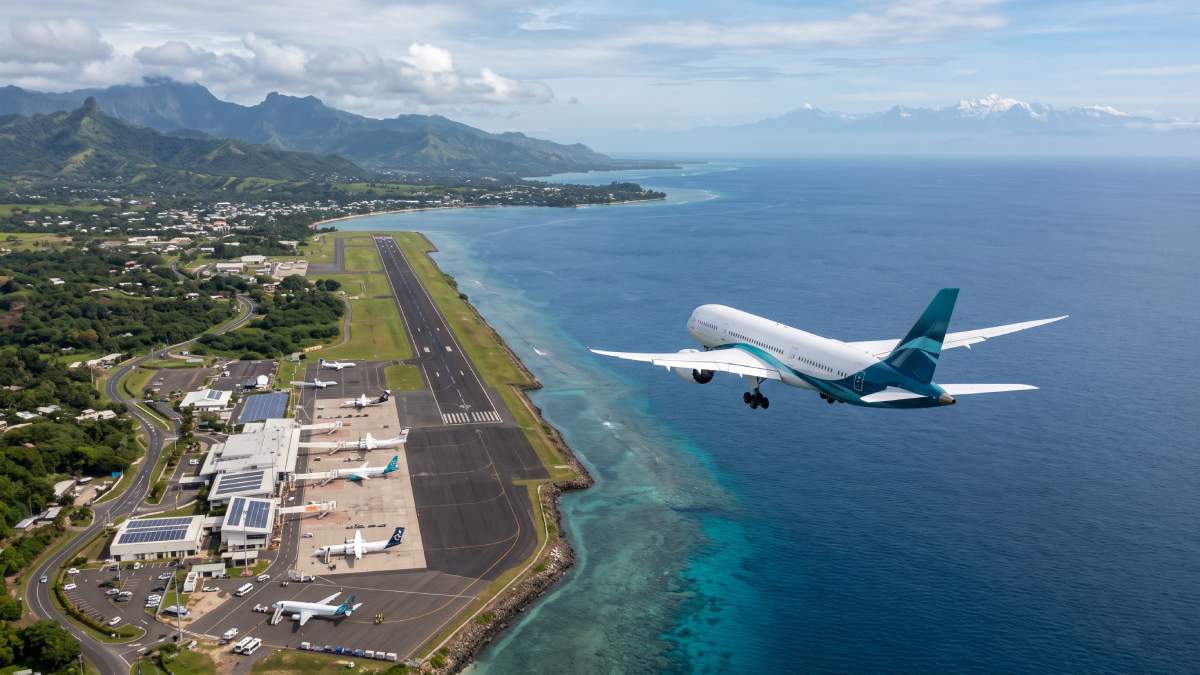
The diplomatic framework of Oceania is witnessing an unparalleled shift in its structure. The Duavata Pacific aviation corridor has been institutionalised via an historic bilateral agreement whereby Fiji and New Zealand have become interconnected with the help of robust air corridors, a well-coordinated border regime, and international joint marketing efforts. Unlike the isolated holiday hopping in islands, economic sustainability is ensured, key airport infrastructure gets modernised, and big two destination loops get created via this novel arrangement. In light of growing geopolitical rivalry in the Pacific, the regional sovereignty of trade is ensured by constructing reliable air bridges between Auckland, Christchurch, Wellington, and Nadi.
The Diplomatic Architecture of the Duavata Partnership
Bilateral Economic Mandates and Sovereign Alignment
Bilateral relations between Suva and Wellington have been evolved well beyond the transactional frameworks of past decades, moving from reactive disaster assistance toward a formalised doctrine of shared economic resilience. The refreshed Duavata Partnership was formally executed on 16 July 2026 by New Zealand Minister of Foreign Affairs Winston Peters and Fiji Minister for Foreign Affairs and External Trade Sakiasi Ditoka during high-level ministerial engagements in Auckland. Rooted in the traditional iTaukei principle of duavata—connoting unified purpose, solidarity, and collaborative action—five binding strategic pillars were established by the treaty: partnership, democracy, and values; economic resilience; peace and security; social well-being; and climate and disaster resilience.
Shared strategic interests in an increasingly contested regional environment are reflected by the renewed accord. As commercial and infrastructural footholds across the South Pacific are sought by major external powers, a collaborative Pacific-led approach to regional governance and critical infrastructure is reasserted by the framework. By civil aviation and trade corridors being elevated into statutory components of economic statecraft, air connectivity has been linked directly to sovereign stability by both nations.
Under the treaty’s accountability provisions, delivery metrics across all areas of cooperation are monitored through annual ministerial consultations and structured bilateral reviews. Air transport is recognized not merely as a conduit for seasonal leisure traffic, but as an essential geopolitical lifeline capable of sustaining critical supply lines, high-value agricultural commerce, and disaster response mobility across maritime Oceania.
The Bilateral Trade Target
An ambitious commitment to scale two-way trade significantly lies at the economic core of the Duavata agreement. Achieving this aggressive expansion requires structural enhancements that cannot be provided by maritime container shipping schedules alone. The bilateral trade target is heavily dependent upon aviation belly-hold capacity, whereby passenger airline networks are transformed into high-frequency logistics bridges.
A dependable baseline revenue stream that underwrites passenger seat economics is formed by belly-hold cargo operations operating between Nadi International Airport (NAN) and primary New Zealand distribution hubs in Auckland (AKL) and Christchurch (CHC). Scheduled widebody and narrowbody flights are relied upon by Fijian agricultural exporters to transport time-sensitive, high-value perishables southward, including fresh root crops, papaya, turmeric, kava, and oceanic seafood. In the northbound direction, New Zealand cold-chain pharmaceuticals, dairy products, specialized agricultural components, and light industrial equipment are carried by flights into Suva and Nadi.
Advertisement
Advertisement
Yield security during off-peak passenger seasons is provided to carriers by this reciprocal logistics pipeline. Airlines are insulated against off-season drops in leisure bookings by freight revenue, allowing high flight frequencies and widebody operations to be supported throughout the year.
Regulatory Streamlining and Border Modernisation
The elimination of operational and administrative friction at international borders is required if fluid air connectivity is to be achieved. Operating under the Duavata mandate, joint programmes focused on border modernisation, pre-clearance digitisation, and biosecurity harmonisation have been deployed by the New Zealand Ministry of Foreign Affairs and Trade (MFAT), the New Zealand Customs Service, and the Fiji Revenue and Customs Service (FRCS).
Central to this technological transformation is the deployment of interoperable digital systems and biometric smart gates at primary border checkpoints. International manifests are transitioned to streamlined electronic formats aligned with the digital New Zealand Traveller Declaration (NZTD) framework, allowing biosecurity and customs risk profiling to be initiated while aircraft are still in flight.
Traditional clearance delays associated with agricultural goods crossing Pacific biosecurity boundaries are significantly reduced by coordinated data exchange protocols. Tight connection windows for passengers transferring between trans-Pacific long-haul legs and domestic island routes are preserved by streamlined passenger flows at Nadi and Auckland. Physical border bottlenecks are converted into coordinated digital checkpoints by this regulatory cohesion without sovereign biosecurity standards being compromised in either country.
Strategic Airport Infrastructure and Regional Dispersal
Nadi International Airport (NAN) Masterplan Expansion
As the primary international gateway processing the vast majority of passenger arrivals and virtually all air freight entering the country, the critical junction of Fiji’s transport economy is represented by Nadi International Airport. In response to growing demand and regional transit requirements, a comprehensive long-term redevelopment programme was launched by Fiji Airports, led by an initial masterplan endorsed by Prime Minister Sitiveni Rabuka.
The hub is future-proofed against projected passenger growth across the mid-Pacific by engineering the masterplan expansion to substantially increase passenger processing capacity. Dedicated off-gate aprons capable of accommodating multiple Code E widebody aircraft alongside several Code C narrowbody aircraft simultaneously are included within the airside investments.
Advertisement
Advertisement
Expanded departure gates fitted with automated boarding infrastructure are also being built, the main departure lounges are being modernised, and dedicated aerobridges at Gates 10 and 11 are being added. Structural upgrades to the primary runway feature heavy-load mill-and-fill resurfacing, Category II instrument landing systems, and energy-efficient LED aeronautical ground lighting.
Sustainability initiatives have been integrated directly into this capital expenditure. The target of achieving carbon neutrality across daily operations is supported by the installation of an airside solar farm and the ongoing electrification of ground support vehicle fleets, matching the infrastructure objectives of Fiji’s National Development Plan.
Nausori International Airport (SUV) as the Capital Hub
While Nadi is functioned as the primary tourism and transhipment turnstile, an indispensable complementary role is served by Nausori International Airport outside the capital of Suva. Having long been constrained by domestic terminal limitations, deliberate upgrades are being undergone at Nausori to establish the facility as an executive, commercial, and diplomatic gateway.
Comprehensive passenger terminal renovations, apron load-bearing enhancements, and a dedicated general aviation precinct are included among the infrastructure developments at Nausori. Substantial network efficiencies are provided as corporate aviation, diplomatic charters, and government missions are decanted away from Nadi directly into Nausori. National government offices can be reached directly by trade delegations and inter-ministerial working groups, avoiding overland transfers across Viti Levu or domestic air connections via Nadi. Precious widebody peak-hour slots at Nadi are preserved for international scheduled carriers by this strategic division of air traffic, while regional corporate connectivity into Suva is improved.
Regional Dispersion: Modernising Labasa (LBS) and Savusavu (SVU)
A common challenge in island tourism economies is geographic centralisation, where international visitor spending remains concentrated within the primary international gateway, exacerbating regional wealth disparities. To address this imbalance, coordinated regional airport upgrades have been launched on Vanua Levu, Fiji’s second-largest island, by the Fijian Government and multilateral development partners, including the World Bank.
Structural overhauls focused on runway resurfacing, safety area enhancements, and terminal modernisations are being undergone at Labasa Airport (LBS) and Savusavu Airport (SVU). Higher-frequency operations using larger turboprop aircraft are permitted by runway resurfacing at Labasa, strengthening regional freight and passenger connections to the northern division.
Advertisement
Advertisement
At Savusavu, higher volumes of high-yield eco-tourists are enabled to transfer smoothly from long-haul flights at Nadi directly to boutique maritime resorts through World Bank-funded pavement upgrades and improved navigation equipment. By regional airside bottlenecks being removed, international economic activity is distributed across peripheral provincial communities by these airstrip investments, supporting the regional economic resilience goals of the Duavata Partnership.
New Zealand Gateways: Auckland, Christchurch, and Wellington
The bilateral aviation corridor is anchored through three distinct gateway nodes in New Zealand, with a tailored role being served by each within the trans-Tasman network:
- Auckland Airport (AKL): As New Zealand’s primary trans-Pacific megahub, the majority of bilateral passenger traffic and high-volume belly-hold freight moving into Fiji is handled by Auckland. International transit passengers are consolidated here while frequent widebody and narrowbody trunk flights into Nadi are operated.
- Christchurch International Airport (CHC): Non-stop flights to Nadi are offered by the primary South Island gateway, bypassing Auckland entirely. Direct Pacific cargo capacity is provided to high-value South Island agricultural exporters while seasonal outbound leisure traffic is captured by this link.
- Wellington International Airport (WLG): Direct diplomatic and trade travel is handled by the capital city gateway, connecting government personnel, policy specialists, and corporate leadership directly between Wellington and Fiji without domestic transfers being required.
Airline Fleet Dynamics, Route Economics, and Alliance Balancing
Fiji Airways: Oneworld Integration and Fleet Deployment
The commercial presence of Fiji Airways across the Asia-Pacific region was transformed upon entering the oneworld alliance as its fifteenth full member. Fiji Airways was directly integrated into the digital booking engines, corporate procurement programmes, and frequent-flyer ecosystems of major global carriers—including American Airlines, Qantas, British Airways, and Cathay Pacific—through the transition from an earlier oneworld connect status to full alliance membership.
The airline’s long-haul strategy is powered by its modern, fuel-efficient fleet. At the high end of its operations, the Airbus A350-900 XWB is flown by Fiji Airways, configured with lie-flat business class suites and economy class seats. Significant reductions in fuel consumption and carbon emissions are delivered by the Rolls-Royce Trent XWB engines compared to older widebodies, providing the range and payload performance required for non-stop routes to North American destinations including Dallas Fort Worth (DFW), Los Angeles (LAX), and San Francisco (SFO).
On trans-Tasman trunk sectors into New Zealand, modern Boeing 737 MAX 8 narrowbodies are deployed alongside selective widebody rotations. Lower per-seat operating costs and a quiet passenger cabin are offered by these aircraft. Multiple daily flights into Auckland, paired with scheduled services into Christchurch and Wellington, are operated to feed passengers from across New Zealand into the Nadi hub.
Air New Zealand: Star Alliance Network Strategy and Winter Gauging
Corridor capacity is balanced through seasonal fleet scheduling by national flag carrier Air New Zealand from its headquarters in Auckland. Operating within the Star Alliance alongside partners such as United Airlines, capacity is adjusted by Air New Zealand to match peak trans-Tasman demand curves.
Advertisement
Advertisement
During the Austral winter, peak demand is generated by New Zealand travellers seeking tropical escapes. In response, select Auckland–Nadi flights are up-gauged to widebody Boeing 787-9 Dreamliners, augmenting baseline Airbus A321neo narrowbody operations. A multi-cabin layout featuring lie-flat business accommodation, premium economy seating, and substantial belly-hold cargo space for bilateral trade goods is provided by the widebody aircraft.
During shoulder and off-peak months, operations are shifted back to high-frequency Airbus A321neo narrowbodies. Competitive per-seat economics and reduced emissions are delivered by the narrowbody aircraft configured for short-haul international sectors, allowing daily schedules to be preserved without yields being diluted during seasonal dips in travel demand.
Decentralising Beyond Auckland: The Secondary Gateway Strategy
Unnecessary operational friction is created when all South Island passenger traffic is routed through Auckland: domestic transfers, extra security screenings, and extended journey times are faced by South Island travellers. Under the connectivity mandate of the Duavata framework, international air traffic is decentralised through direct regional connections.
A non-stop alternative is provided for South Island travellers via direct Christchurch–Nadi services. Traffic across the Canterbury Plains and the wider South Island is captured, serving outbound holidaymakers and offering international inbound visitors direct access to the South Island following a Fijian stopover.
Simultaneously, diplomatic, governmental, and corporate travel is served by direct Wellington–Nadi flights. Institutional ties between Wellington and Suva are sustained through these non-stop flights, allowing transfer delays in Auckland to be bypassed by public sector delegations, technical advisors, and business leaders.
Engineering the Two-Stop Pacific Circuit
Long-Haul Feeders: Connecting North America to Oceania
An innovative joint routing model that changes how international long-haul visitors experience the South Pacific is represented by the two-stop Pacific circuit. Historically, Pacific destinations were viewed in isolation by tourists from North America and Europe: either a beach stay in Fiji or an extended self-drive holiday across New Zealand was typically booked. Multi-country holidays were rendered difficult and expensive by long trans-Pacific flight times and separated ticketing systems.
Advertisement
Advertisement
These hurdles are overcome by taking advantage of the non-stop North American network operated by Fiji Airways. Non-stop Airbus A350-900 services from Los Angeles and San Francisco are operated, alongside a direct route from Dallas Fort Worth—the central hub of oneworld partner American Airlines. Passengers from numerous cities across the US interior, the Atlantic coast, and Latin America can be drawn through DFW with a single domestic connection and flown directly to Nadi across an overnight sector.
Joint Destination Marketing and Integrated Packaging
Rather than competition being waged for the same visitors, complementary, multi-destination itineraries are marketed cooperatively by Tourism Fiji and Tourism New Zealand alongside airline alliance partners. Two diverse environments are packaged into a single journey:
- Stage 1 (Tropical Ingress): Nadi International Airport is reached by North American travellers on an overnight long-haul flight, stepping directly into coastal resort or island ecotourism experiences across Viti Levu, the Mamanuca Islands, or upgraded aerodromes on Vanua Levu for a multi-day stay.
- Stage 2 (Trans-Tasman Transition): Having rested and acclimated to regional time zones, a short flight from Nadi to Auckland or Christchurch is boarded, allowing arrival in New Zealand ready for exploration without the physical fatigue of continuous long-haul travel.
- Stage 3 (Sub-Antarctic Exploration): Between one and two weeks are spent exploring New Zealand’s South Island, alpine landscapes, and cultural heritage, completing a diverse multi-destination holiday.
- Stage 4 (Open-Jaw Extraction): The journey is concluded as passengers return directly to North America via non-stop services from Auckland, creating an open-jaw Pacific loop that avoids backtracking.
Booking the circuit is rendered straightforward through coordinated ticketing, interline baggage agreements, and aligned airline loyalty systems. Higher returns from long-haul tourism are earned by both island nations through collaboration, while a seamless, diverse vacation experience is provided to visitors.
| Itinerary Component | Routing & Service Node | Operating Carrier & Equipment | Minimum Dwell Time | Passenger Dynamic & Economic Value |
| Leg 1: Trans-Pacific Entry | DFW / LAX / SFO to Nadi (NAN) | Fiji Airways (Airbus A350-900) | Multi-day stay | Tropical decompression; high-yield island resort stays and outer-island excursions |
| Leg 2: Corridor Transit | Nadi (NAN) to Christchurch (CHC) or Auckland (AKL) | Fiji Airways (Boeing 737 MAX 8) | Short transit flight | Cross-border connection; rested passengers are transferred directly into New Zealand gateways |
| Leg 3: Touring Window | New Zealand South & North Island touring circuits | Domestic transport / Regional flights | Extended touring period | Premium adventure travel, ecotourism, regional hospitality, and cultural touring |
| Leg 4: Long-Haul Recovery | Auckland (AKL) to North American gateways | Air New Zealand (Boeing widebody fleet) | Trans-Pacific return sector | Direct non-stop return; passenger route utility is maximised via open-jaw ticketing |
Decarbonisation, Fiscal Policy, and Environmental Priorities
Sustainable Aviation Fuel (SAF) Realities in Isolated Geographies
Significant logistical hurdles are presented in decarbonising long-haul flights across Oceania. While the use of sustainable aviation fuel (SAF) is being increased by major international airlines in Europe and North America, acute supply chain realities are faced by remote island states. Aviation fuel is not produced domestically in Fiji; all aviation turbine fuel must be transported across wide ocean expanses aboard commercial tankers.
Supply and cost complications are introduced when unblended or neat SAF is imported across long maritime routes into Nadi. The cost of delivered SAF can be elevated substantially by maritime shipping and specialized bunkering surcharges compared to conventional jet fuel. While SAF supplies are tested by Air New Zealand on domestic and trans-Tasman routes, widespread adoption on Pacific island flights remains constrained by regional refinery limits and shipping economics.
Under Priority Area 5 of the Duavata Partnership, decarbonisation efforts are focused by both governments on immediate, achievable operational efficiencies. Unnecessary fuel burn is reduced through modernised air traffic control, continuous-descent arrival paths, and the electrification of airport ground support, while broader regional SAF production and distribution networks are developed.
Advertisement
Advertisement
Environmental Levies and Balancing Passenger Economics
New cost considerations across regional routes have been introduced by environmental tax policies. The International Visitor Conservation and Tourism Levy (IVL) was raised for eligible international entrants by the New Zealand Government under Tourism and Hospitality Minister Matt Doocey and Conservation Minister Tama Potaka, with hypothecated revenues dedicated to maintaining public conservation lands and protecting high-use tourist regions.
While passport holders from Pacific Island Forum nations—including Fiji—remain exempt from the IVL, the levy is applied directly to North American, European, and East Asian visitors undertaking the two-stop Pacific circuit. When combined with increased visa processing charges, sector debate was prompted regarding whether added entry fees could influence price-sensitive holidaymakers.
At the same time, climate adaptation and conservation charges are embedded by the Fijian Government within airport departures and service turnover taxes. Rather than these funds being pooled into general revenues, they are directed into climate-resilience infrastructure: coastal seawalls along vulnerable airport perimeters are reinforced, stormwater pumping stations are constructed, and renewable microgrids are installed across regional airfields.
The Move Toward Climate-Conscious Tourism
Promotional messaging has been updated by tourism boards and airlines to keep passenger numbers healthy despite rising travel costs. A pivot away from promoting discount mass tourism has been executed by Tourism Fiji and Tourism New Zealand, positioning Pacific travel instead as a high-value, climate-conscious experience.
Marketing campaigns appeal to travelers who value sustainable tourism practices by demonstrating how real-world conservation—such as protecting coastal reefs, planting native forests, and powering airport operations with clean solar energy—is funded directly by environmental fees. Higher regulatory and fuel costs can be absorbed through this high-value model, supporting both environmental protection and steady economic growth.
Strategic Outlook and Regional Aviation Priorities Toward 2030
A clear roadmap for deepening cooperation between Fiji and New Zealand across commercial aviation and regional trade is provided by the refreshed Duavata Partnership. How developed and developing island economies can cooperate effectively is demonstrated by both nations through linked airport infrastructure investments, fuel-efficient fleet planning, digital border management, and combined long-haul marketing.
Advertisement
Advertisement
Operational milestones will determine the ongoing success of the corridor:
- Airside and terminal upgrades at Nadi International Airport being completed to comfortably process expanded passenger volumes, keeping mid-Pacific transit running smoothly.
- Direct seasonal flights from Christchurch and Wellington into secondary Fijian destinations being expanded to distribute visitor spending and economic opportunities across more communities.
- Reliable, verified book-and-claim regional green fuel accounting models being established, allowing island carriers to participate in international carbon reduction programmes despite ocean shipping hurdles.
That air connectivity can be more than just a seasonal leisure asset is proven by the Duavata framework. An aviation network that protects trade security, supports climate resilience, and keeps the South Pacific well-connected for decades to come is being constructed by Fiji and New Zealand by treating international routes as strategic infrastructure.
The relationship between Pacific island economies and their developed neighbors concerning how they work together through shared skies has been completely transformed by the updated Duavata agreement. Through the use of economic connections that take the place of fragmented leisure travel, an economy that is ready for economic growth is set up via the Duavata Pacific flight corridor. The problem of geographic isolation is overcome at the same time that trade is facilitated by updated airport hubs, new wide-body planes, and dual-stop circuits. Even though there may be challenges in terms of fuel switching costs and higher environmental fees, adaptation is guaranteed by bilateral cooperation.